Lead
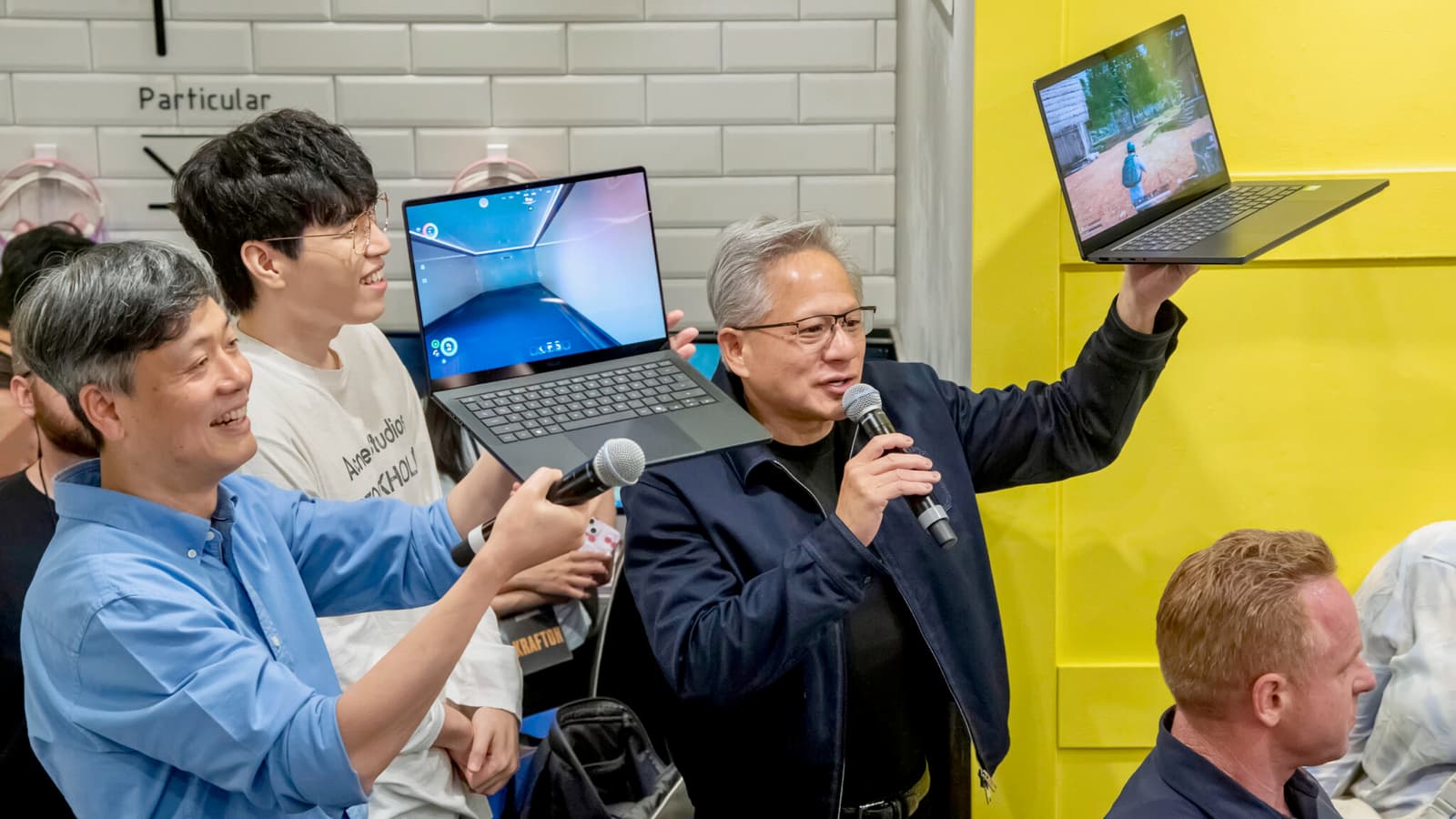
Jensen Huang, founder and CEO of NVIDIA, arrived in Seoul this week to meet the partners and builders behind South Korea’s sovereign AI infrastructure, signaling a coordinated effort to lower AI development costs.
Context
According to NVIDIA Newsroom, South Korea hosts a dense network of AI hardware, robotics innovators, and one of the world’s most passionate gaming communities, making it a natural hub for AI growth. Huang’s visit, announced on June 5, 2026, is part of a broader push to cement the country’s role in the next generation of artificial intelligence.
Across the Pacific, OpenAI broke ground on a 1‑gigawatt data center in Michigan earlier this month, a project dubbed “Stargate” that aims to expand access, create jobs, and strengthen community ties. The Michigan effort illustrates how scale‑up of AI compute is being paired with local economic benefits.
Meanwhile, OpenAI’s blog highlighted a recent success story: Wasmer used Codex with the GPT‑5.5 model to assemble a Node.js runtime for edge deployment. The team reported a ten‑to‑twenty‑fold acceleration, delivering a product in weeks instead of months. That speed boost translates directly into lower labor and infrastructure costs.
Google’s AI Blog also showed how AI can shrink production timelines. Engineers leveraged Gemini to build the entire Google I/O 2026 experience, demonstrating that large‑scale event creation can be automated with generative models.
Impact
The convergence of these stories points to a clear trend: AI infrastructure is being built with cost efficiency in mind. NVIDIA’s presence in Seoul reinforces South Korea’s ability to host sovereign AI stacks, reducing reliance on foreign cloud providers and potentially lowering operating expenses for domestic firms.
OpenAI’s Michigan data center, while massive, is framed as a community‑focused investment that could spread costs across public and private partners, making high‑performance compute more affordable for regional developers.
Wasmer’s rapid edge‑runtime build shows that AI‑assisted coding can slash development cycles, which traditionally dominate project budgets. By delivering a functional runtime in weeks, teams avoid months of engineering effort, cutting both salary spend and the need for extensive test hardware.
Google’s use of Gemini for an entire conference further proves that generative AI can replace many manual production steps, trimming costs associated with design, video editing, and content coordination.
What’s Next
In Seoul, NVIDIA plans to showcase its latest GPUs and AI software platforms to local startups and established manufacturers. The agenda includes workshops on AI‑accelerated robotics and gaming, sectors where cost‑effective compute can unlock new products.
OpenAI’s Michigan site is slated for completion later this year, after which it will begin serving research labs and enterprise customers, potentially lowering the price of high‑end AI services in the Midwest.
Wasmer’s edge runtime is now available for broader testing, and the company hints at additional Codex‑driven tools aimed at compressing development pipelines further.
Google has announced that Gemini‑powered workflows will become part of its public AI toolkit, offering developers a way to automate large‑scale content creation without building custom models.
Collectively, these moves suggest that AI infrastructure and cost reduction are becoming twin pillars of the industry’s growth strategy, with Seoul emerging as a key node in the global network.
📎 Related Articles
NVIDIA Launches PC SoC to Broaden AI Infrastructure • NVIDIA unveils Cosmos 3, an open physical AI model • NVIDIA AI Cloud Grows Globally to Power Expanding AI Compute • Alpamayo 2 Super Model Boosts AI Infrastructure for Robotaxis • NVIDIA AI Boosts TSMC Fab Design, Cuts Simulation Time • NVIDIA Jetson adds agentic AI tools, trims edge compute costs • NVIDIA, Microsoft Unify Agentic AI Stack Across Windows, Azure, and Edge • Taiwan Powers Global AI Buildout with NVIDIA's Vera Rubin
Explore related AI topics
AI News Today • AI Agents • AI Models • AI Coding Tools • AI Video Tools • Gemini vs ChatGPT • Open Source AI Models