Lead
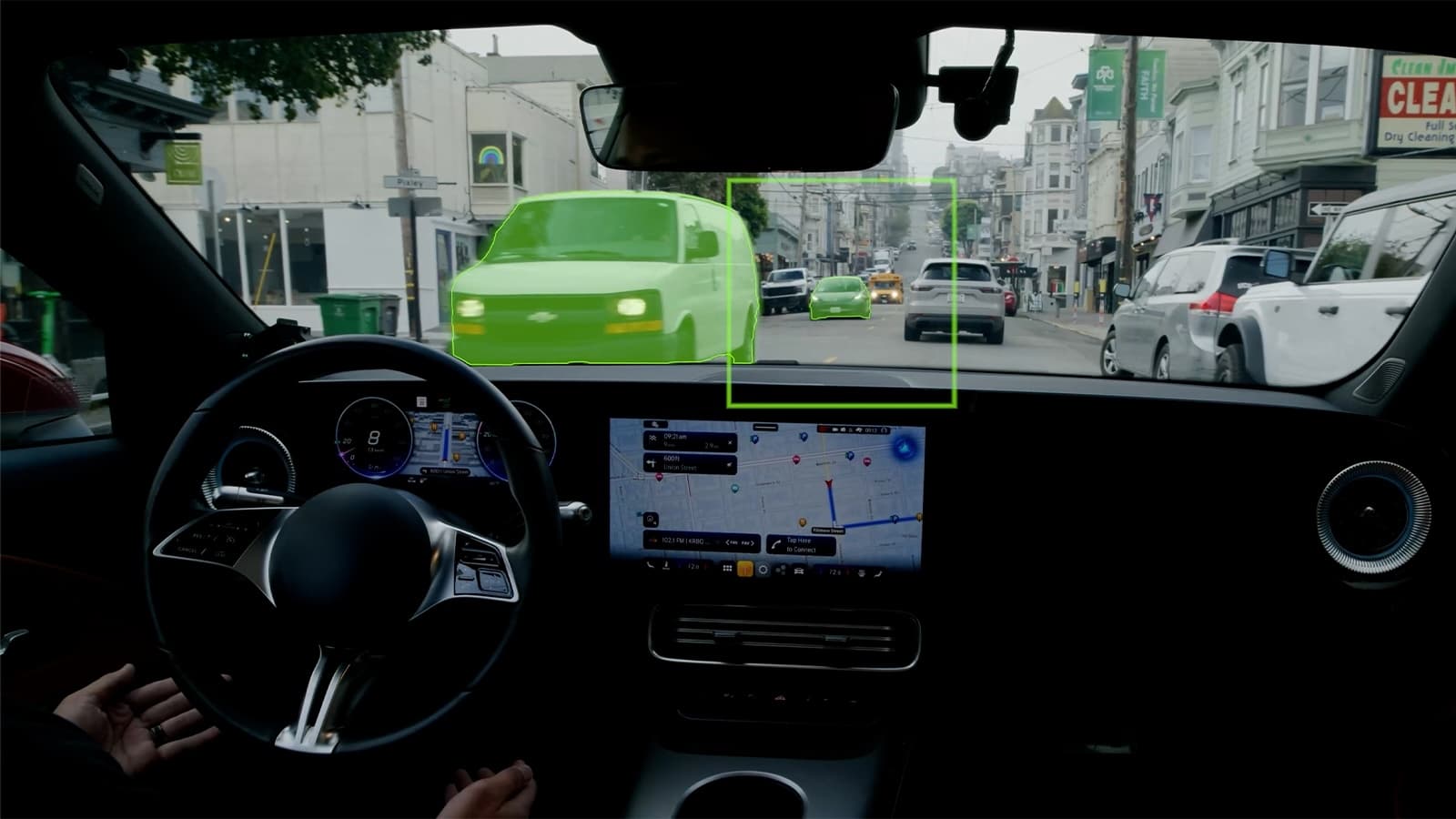
NVIDIA launched Cosmos 3 on June 1, 2026, an open‑world foundation model for physical AI that merges vision reasoning, world generation and action prediction in a single system.
Context
The announcement came from NVIDIA’s official newsroom and describes Cosmos 3 as built on a new mixture‑of‑transformers architecture. By unifying three core capabilities—seeing, imagining and acting—the model is positioned as a single stack for robotics, simulation and other embodied AI tasks.
At the same time, OpenAI made its frontier models and Codex generally available on Amazon Web Services, giving enterprises a familiar procurement path and the ability to run large models within existing AWS environments. Google, earlier in May, introduced Gemini 3.5 at its I/O event, a model that also blends frontier intelligence with action.
Impact on AI infrastructure and cost
Cosmos 3’s integrated design could shift how companies provision compute. Rather than wiring separate vision, simulation and control models, developers can run one model that handles the full pipeline. Fewer moving parts often translate to lower GPU memory footprints and reduced orchestration overhead, which in turn can trim cloud‑service bills.
OpenAI’s AWS rollout illustrates a parallel trend: providers are leaning on established cloud platforms to lower the friction of scaling large models. By using the same AWS controls and procurement workflows that enterprises already trust, OpenAI aims to cut the administrative cost of moving from pilot to production.
When multiple vendors offer single‑stack solutions, data‑center operators may see a convergence in hardware demand. NVIDIA’s Vera CPU, recently highlighted for agentic AI workloads, could see increased adoption as customers pair it with Cosmos 3 to run the full physical‑AI stack on‑premises, potentially reducing reliance on expensive public‑cloud GPU instances.
What’s next
Cosmos 3 is released as an open model, meaning developers can download and fine‑tune it for specific robots, drones or simulation environments. NVIDIA has not disclosed a roadmap, but the company’s history of rapid follow‑ups suggests additional versions or tooling could appear later this year.
OpenAI’s governance framework, published at the end of May, signals that safety and compliance will accompany broader cloud availability, a factor enterprises will weigh alongside cost.
Industry watchers will monitor adoption rates over the next months, especially how quickly robotics firms migrate from multi‑model pipelines to a single Cosmos 3 workflow, and whether cloud providers adjust pricing to reflect the new efficiency gains.
📎 Related Articles
NVIDIA Launches PC SoC to Broaden AI Infrastructure • Alpamayo 2 Super Model Boosts AI Infrastructure for Robotaxis • Meta unveils AI‑enabled pendant concept • Google Unveils Gemini 3.5 at I/O, Boosting AI Actionability • OpenAI Model Cracks 80‑Year‑Old Geometry Conjecture • EC‑Council unveils ADG AI Framework for enterprise AI governance • EC-Council unveils ADG AI Framework for enterprise governance • Google Unveils Gemini 3.5 at I/O 2026, Ushering an Agentic AI Era
Explore topic hubs
AI News Today • AI Agents • AI Models • AI Coding Tools • AI Video Tools