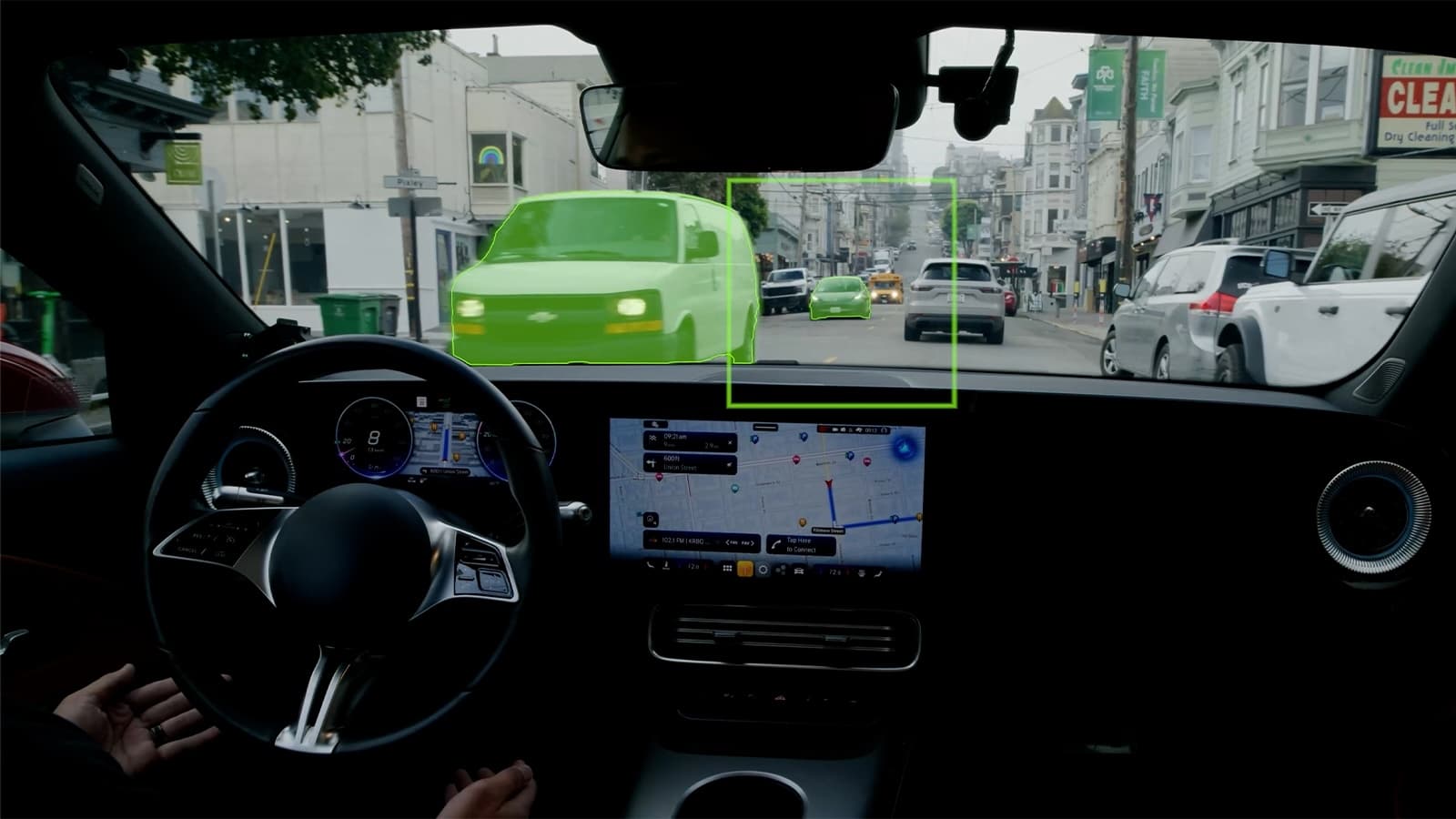
NVIDIA announced on June 1, 2026 that it has launched Alpamayo 2 Super, a 32‑billion‑parameter reasoning‑based vision‑language‑action (VLA) model designed for safe, level‑4 robotaxi development.
Context
Alpamayo 2 Super extends the existing Alpamayo family of open AI models, simulation frameworks and physical AI datasets. The model combines visual perception, language understanding and action planning in a single reasoning engine, a capability NVIDIA says is essential for autonomous taxi fleets operating in complex urban environments.
At the same time, NVIDIA is scaling the supporting infrastructure that makes such large models practical. In a separate announcement, the company described its AI Cloud ecosystem as a global effort to build “AI factory” capacity for enterprises, startups, nations and AI labs. Partners are adding compute nodes to meet the exploding token demand behind popular AI applications, a move that directly influences the cost per inference for models like Alpamayo 2 Super.
During GTC Taipei at COMPUTEX, NVIDIA also introduced the Factory Operations Blueprint (FOX), a reference design that turns a factory’s live machine signals, quality systems and work instructions into a unified decision layer. This blueprint is intended to give factories an autonomous AI brain that can manage resources, schedule workloads and, crucially, allocate compute for AI workloads efficiently.
In Taiwan, more than 500 NVIDIA ecosystem partners have deployed over one million MGX rack components for the Vera Rubin infrastructure across 25 factory sites. As Vera Rubin ramps into full production, it will power agentic AI factories worldwide, providing the hardware backbone for demanding models such as Alpamayo 2 Super.
Impact
The launch of Alpamayo 2 Super has immediate implications for the cost structure of robotaxi services. A 32‑billion‑parameter model requires substantial GPU memory and high‑throughput networking to deliver real‑time inference. By tying the model to its expanding AI Cloud, NVIDIA aims to spread these hardware costs across a shared pool of resources, reducing the per‑vehicle expense for operators.
The AI Cloud’s “purpose‑built clouds” are engineered to handle token‑intensive workloads, meaning that the same infrastructure can support both conversational agents and the heavy vision‑language‑action streams needed for autonomous driving. This multi‑tenant approach is expected to lower capital expenditures for fleet operators, who otherwise would need to invest in dedicated on‑premise GPU clusters.
Factory Operations Blueprint further tightens the cost equation. By integrating live production data with AI decision‑making, factories can dynamically allocate compute to the most demanding tasks—whether training new robotaxi models or running inference at the edge. The result is higher utilization of MGX racks, which translates into better amortization of the hardware investment.
Finally, Taiwan’s massive rollout of Vera Rubin hardware creates a regional supply of high‑performance compute. The concentration of over a million MGX racks in a single ecosystem reduces logistics costs and shortens delivery times for AI hardware, indirectly driving down the total cost of ownership for companies deploying Alpamayo 2 Super in robotaxi fleets.
What’s Next
NVIDIA plans to open the Alpamayo 2 Super model to developers through its AI Cloud, allowing startups and research labs to experiment with level‑4 autonomous driving scenarios without building their own data centers. The company also hinted at future iterations that will integrate more efficient transformer kernels, potentially shrinking the memory footprint while preserving reasoning power.
On the infrastructure side, NVIDIA’s partners in Taiwan are scaling Vera Rubin production to meet projected global demand. As the AI Cloud ecosystem expands, more regions will gain access to purpose‑built clouds, further diffusing the cost of running large VLA models.
The Factory Operations Blueprint will be rolled out as a software package that can be installed on existing factory control systems, giving manufacturers a ready‑made AI brain to manage both production and AI workloads. This could accelerate the deployment of autonomous robotaxi fleets that rely on factory‑produced hardware and software stacks.
In short, the combination of a powerful new reasoning model, a growing shared AI Cloud, and a factory‑level AI blueprint sets the stage for robotaxi operators to access advanced autonomy at a lower economic barrier.
📎 Related Articles
NVIDIA Launches PC SoC to Broaden AI Infrastructure • OpenAI gives GPT‑Rosalind free for pandemic preparedness • EC‑Council unveils ADG AI Framework for enterprise AI governance • EC-Council unveils ADG AI Framework for enterprise governance • OpenAI Expands AI Tools for Schools Worldwide • OpenAI Model Solves 80‑Year‑Old Unit Distance Problem • AdventHealth Boosts Whole-Person Care with OpenAI's ChatGPT • OpenAI Launches Global Education Expansion for Schools
Explore topic hubs
AI News Today • AI Agents • AI Models • AI Coding Tools • AI Video Tools