NVIDIA announced on June 1 that its AI Cloud ecosystem is expanding worldwide to meet the exploding demand for AI compute.
The company described the ecosystem as a network of purpose‑built clouds that serve the token‑hungry workloads behind today’s most popular AI applications. Partners across the globe are adding capacity to support enterprises, startups, nations, AI labs and developers who are scaling agentic AI services, according to the NVIDIA Newsroom release.1
In Taiwan, the effort has taken on a concrete form. More than 500 local ecosystem partners are deploying over 1 million NVIDIA MGX rack components for the Vera Rubin infrastructure across 25 factory sites. The Vera Rubin system is moving into full production, positioned to power agentic AI factories worldwide, the announcement said.3
At the same time, NVIDIA unveiled the Factory Operations Blueprint (FOX), a reference design that gives factories an AI brain capable of linking live machine signals, quality systems, work instructions and operational alerts into a single decision layer. Presented at GTC Taipei during COMPUTEX, FOX is intended to accelerate the shift from isolated automation to plant‑wide intelligence.2
The expansion also dovetails with a new partnership between NVIDIA and TSMC. TSMC is integrating NVIDIA’s accelerated computing and AI tools into its semiconductor design and manufacturing processes, a move that should tighten the feedback loop between silicon creation and AI‑driven optimization.4
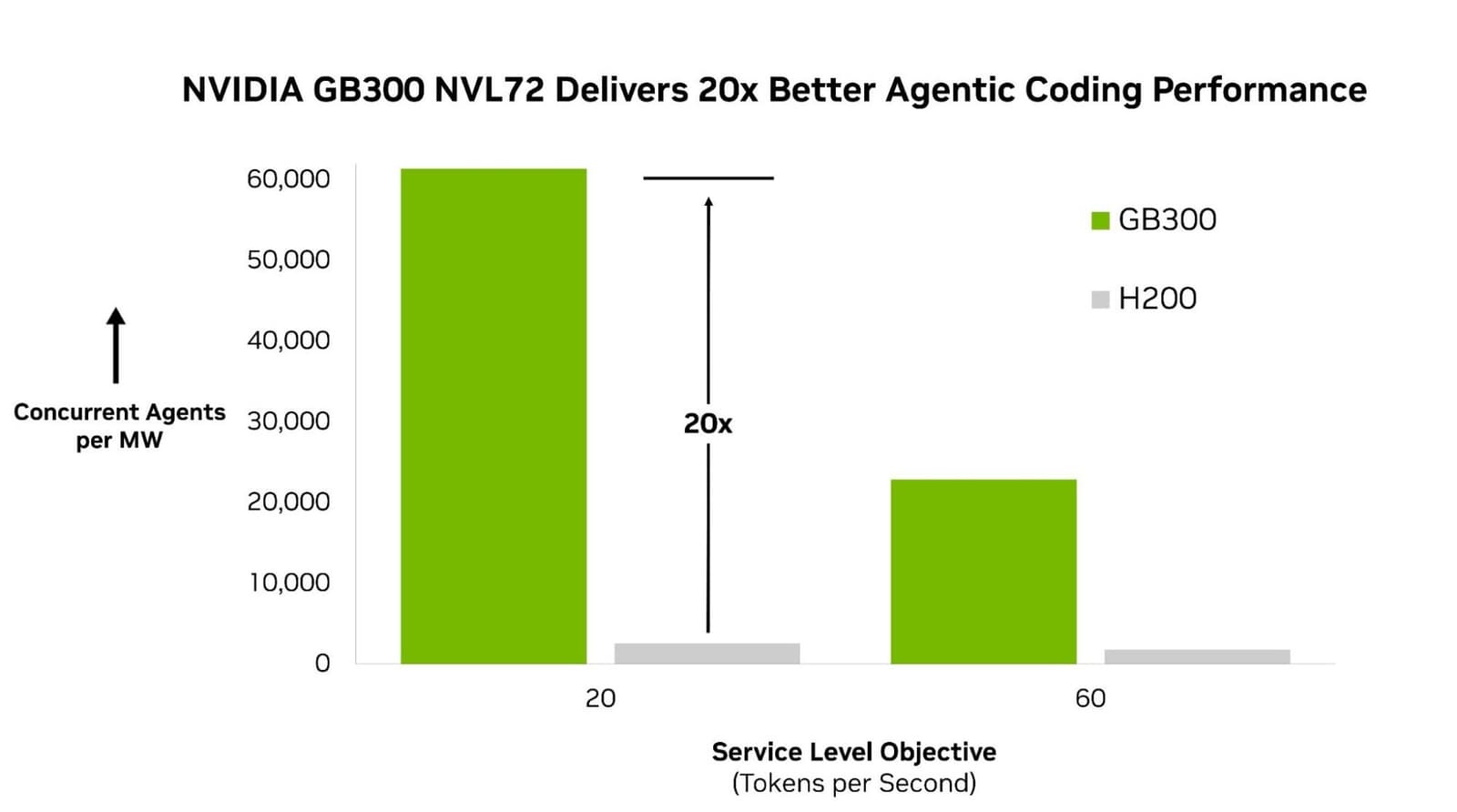
From an infrastructure standpoint, the broader AI Cloud rollout promises to spread compute costs across a larger, more distributed pool of resources. By adding dedicated, token‑optimized clouds, NVIDIA aims to reduce the per‑token price that enterprises pay when they run large language models or other agentic AI workloads. The company’s messaging emphasizes that purpose‑built clouds can deliver higher throughput without the inefficiencies of general‑purpose data centers.
For developers and startups, the expanded ecosystem means shorter provisioning times and more predictable pricing. When a cloud is engineered for AI token traffic, the underlying hardware—GPUs, AI‑accelerated CPUs and high‑speed interconnects—can stay fully utilized, lowering idle capacity and, by extension, the cost passed on to users. The Taiwan rollout, with its dense concentration of MGX racks, illustrates how regional clusters can achieve economies of scale that translate into cheaper access for local AI labs.
Manufacturers stand to benefit as well. The FOX blueprint gives factories a unified AI decision layer, reducing the need for multiple siloed systems and the associated integration expenses. By feeding real‑time data into a single model, factories can cut waste, improve yield and avoid costly downtime, all while relying on the same AI Cloud infrastructure that powers other enterprise workloads.
Looking ahead, NVIDIA plans to keep adding partners to the AI Cloud network and to push Vera Rubin into additional fab sites worldwide. The company hinted that further collaborations with semiconductor leaders like TSMC will deepen AI’s role in chip design, potentially accelerating the next generation of compute hardware. As the ecosystem matures, cost‑savings are expected to cascade from cloud operators to end users, making large‑scale AI projects more financially viable.
In short, the worldwide expansion of NVIDIA’s AI Cloud ecosystem is not just a capacity boost; it is a strategic move to flatten the cost curve of AI compute, bring uniform performance to factories, and embed AI deeper into the semiconductor supply chain.
📎 Related Articles
Alpamayo 2 Super Model Boosts AI Infrastructure for Robotaxis • NVIDIA unveils Cosmos 3, an open physical AI model • NVIDIA Launches PC SoC to Broaden AI Infrastructure • Anthropic rolls out Claude Opus 4.8 and readies Mythos models for all users • OpenAI rolls out election‑info tools and AI safeguards • Anthropic lands $65 B Series H, valuation tops $965 B • Debate Over AI Psychosis Hits Equity Podcast • Anthropic to Release Mythos‑Level AI Models in Weeks
Explore topic hubs
AI News Today • AI Tools • AI Agents • AI Models • AI Coding Tools