TL;DR: Telecom operators can upgrade from isolated task automation to always‑on, trusted AI agents by defining repeatable processes, provisioning NVIDIA’s AI platform, wiring agents into OSS/BSS, and applying continuous security monitoring. Follow the five‑step workflow below to get a pilot running in weeks.
Key takeaways
- Automation in telecom is shifting from discrete tasks to autonomous, 24/7 AI agents (NVIDIA Newsroom, 2026).
- Successful deployment requires clear use‑case definition, NVIDIA AI infrastructure, and a trust framework that includes real‑time monitoring.
- Start with a narrow pilot—network fault triage or chatbot‑first‑line support—then expand to back‑office workflows.
- Apply security best practices from DeepMind’s AI Control Roadmap to keep agents trustworthy.
- Leverage lessons from OpenAI’s research on agent‑driven work and Samsung’s enterprise rollout for change management.
Problem: Stalled Automation in Telecom Operations
Telecom operators have been using generative AI to speed up network management, customer‑care, and back‑office tasks, but most of the gains remain task‑based. According to NVIDIA Newsroom (June 23 2026), automation now often stops at the point where a human must manually correlate insights and decide the next step. The result is a fragmented workflow: AI does the heavy lifting, then hands the baton to an operator who must interpret the output, verify it, and trigger downstream actions. This hand‑off creates latency, introduces error risk, and prevents operators from realizing the full value of AI.
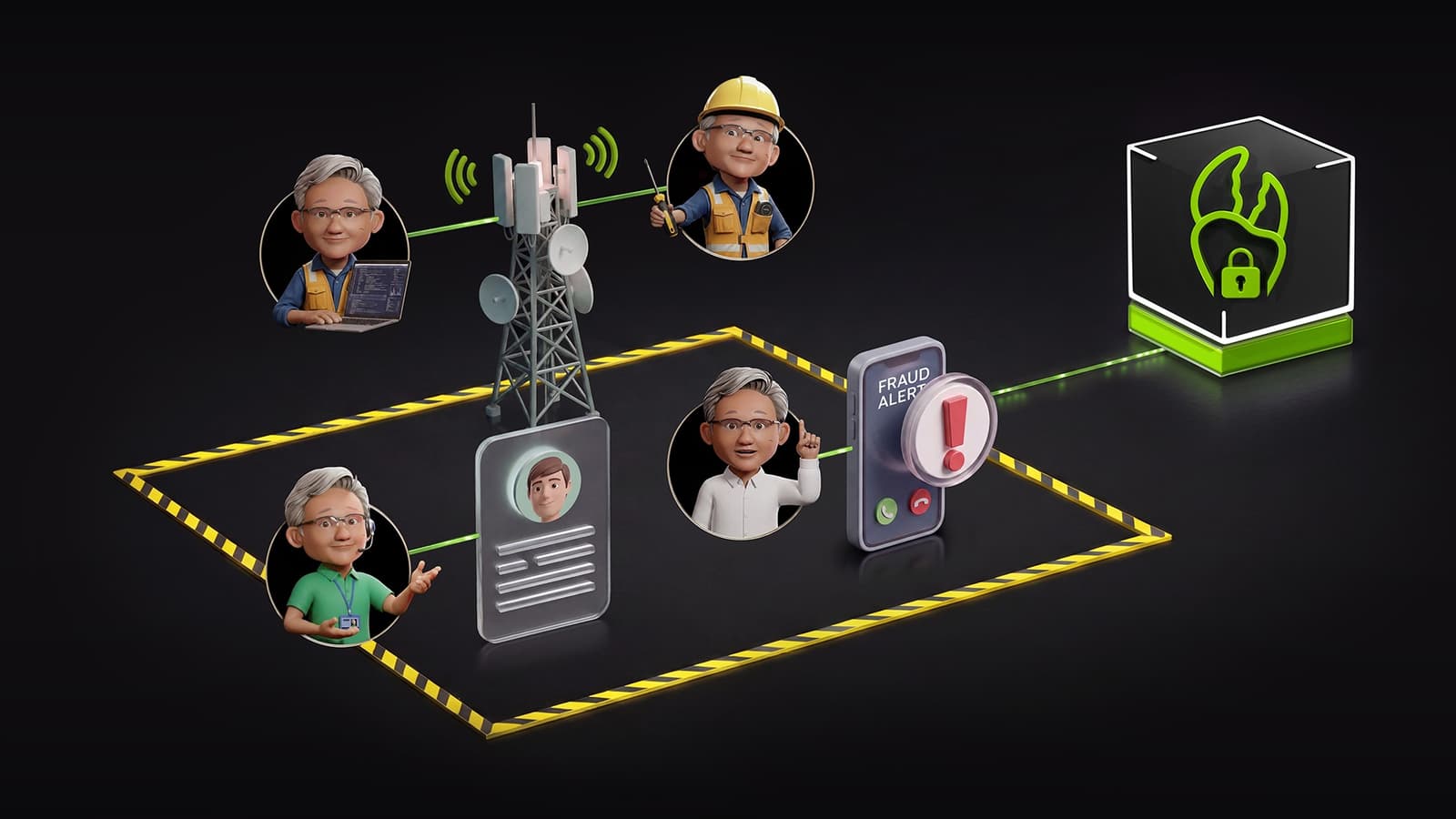
What telecoms really need is a trusted, always‑on (24/7) AI agent that can not only generate insights but also act on them autonomously—while staying within compliance and security boundaries. NVIDIA’s recent announcement frames this shift as moving from “automation is the finish line” to “automation is the launchpad to autonomy.” The challenge for engineers is turning that vision into a concrete, repeatable deployment.
Prerequisites: Foundations Before You Build
Before you start wiring AI agents into your network, make sure the following pieces are in place:
- Clear, repeatable use cases. Identify processes that are high‑volume, rule‑driven, and have measurable KPIs (e.g., fault detection, service‑order validation, first‑line chatbot interactions). The use case should be narrow enough to prototype quickly but broad enough to show ROI.
- Access to NVIDIA’s AI infrastructure. NVIDIA provides foundation models and GPU‑accelerated inference services that power the agents. You’ll need either on‑premise DGX hardware or cloud access via NVIDIA AI Enterprise.
- Data pipelines. Agents require real‑time telemetry from OSS/BSS, network element logs, and customer interaction streams. Ensure you have secure APIs or streaming platforms (Kafka, gRPC) that can feed data with low latency.
- Security & compliance framework. Trust is non‑negotiable. DeepMind’s AI Control Roadmap (June 16 2026) recommends combining traditional safeguards (access controls, audit logs) with real‑time monitoring of agent behavior.
- Cross‑functional team. Include network engineers, data scientists, security officers, and change‑management leads. Samsung’s enterprise rollout of ChatGPT and Codex (June 21 2026) highlighted the importance of a dedicated adoption team to handle training and governance.
Step‑by‑Step Workflow: From Idea to 24/7 Agent
- Define the pilot scope. Choose a single, high‑impact task—such as automated fault triage for a specific network slice. Document the current manual workflow, success metrics, and failure modes.
- Provision NVIDIA AI resources. Spin up the required GPU instances (DGX Cloud or on‑prem). Load the appropriate foundation model (e.g., NVIDIA’s large language model tuned for telecom jargon). Test inference latency to ensure sub‑second response times.
- Build the agent logic. Using the model’s API, wrap the inference call in a lightweight orchestrator (Python, Node.js, or a serverless function). The orchestrator should: (a) ingest real‑time telemetry, (b) generate a recommendation, (c) validate the recommendation against policy rules, and (d) execute the action via OSS/BSS APIs.
- Implement trust safeguards. Apply DeepMind’s control checklist:
- Whitelist permissible actions.
- Log every decision with immutable timestamps.
- Set up a watchdog service that can abort the agent if anomalies (e.g., unexpected command patterns) are detected.
- Integrate with existing systems. Connect the agent’s output channel to the network‑management console or ticketing system. Use standard protocols (REST, NETCONF) to keep integration low‑risk.
- Run a shadow mode. For the first 48‑72 hours, let the agent suggest actions while humans retain final approval. Capture performance data, false‑positive rates, and operator feedback.
- Transition to full autonomy. Once confidence thresholds are met (e.g., >95 % correct recommendations), flip the approval flag so the agent can act without human sign‑off. Keep the watchdog active to roll back if needed.
- Monitor and iterate. Continuously track KPIs (mean‑time‑to‑repair, call‑center deflection rate, cost savings). Use the monitoring data to retrain the model or adjust policy rules. This feedback loop is essential for the “autonomous” phase described by NVIDIA.
Pro Tips: Making the Deployment Smooth and Sustainable
- Start with a sandbox. NVIDIA’s platform allows you to spin up isolated environments. Test data ingestion and model behavior before touching production.
- Leverage OpenAI research. The OpenAI paper (June 25 2026) shows that agents excel when they can plan multi‑step tasks. Mirror that approach by letting your telecom agent generate a short action plan rather than a single command.
- Adopt a phased governance model. Mirror Samsung’s enterprise rollout: begin with a “pilot” governance board, then expand to a “center of excellence” as the agent fleet grows.
- Use real‑time observability. DeepMind’s roadmap stresses continuous monitoring. Deploy dashboards that surface latency, decision‑audit trails, and security alerts in a single view.
- Document fallback procedures. Even trusted agents can encounter edge cases. Keep a manual override SOP that operators can trigger instantly.
What Happens Next: Scaling Autonomy Across the Enterprise
After a successful pilot, the next logical step is to broaden the agent’s remit. Consider adding back‑office processes such as invoice validation or service‑order provisioning. Each new domain will repeat the same workflow: define scope, provision NVIDIA models, embed trust controls, and monitor outcomes. Over time, the collection of agents can be orchestrated as a “team” that hands off tasks to one another, moving the telecom operator closer to the fully autonomous vision NVIDIA outlined.
Remember, the journey from task‑based automation to 24/7 autonomous agents is incremental. By following the practical steps above, you can ensure that each increment adds measurable value while keeping the system secure and compliant.
📎 Related Articles
Deploy Local AI Agents on RTX PCs & DGX Spark • Why Enterprises Must Redesign for Agentic AI • How to Deploy Agentic Gemini Models After I/O 2026 • AWS launches Continuum and Context to secure AI agents • How to Turn Your SOC Analyst Into an AI Agent • NVIDIA XR AI Review: Agent-Powered AR Glasses in Beta • Gemini 3.5 vs GPT‑5.5: Who Owns the Agentic AI Crown? • How to Build a Self‑Service AWS Health Analytics Dashboard with Bedrock Agents
Explore related AI topics