best AI tools for small business

Best AI Tools for Small Business

Compare practical AI tools for small business owners covering marketing, customer support, admin work, sales follow-up, reporting, and automation.

Ranked guide
6
tools compared in this guide
best AI tools for small businessAI tools for small businesssmall business AI toolsAI automation for small business

Built around search intent

This guide targets a specific problem for small business owners, not a generic AI news query. It explains what to use, what to avoid, and how to judge results.

Tools plus workflow

The useful answer is not only a tool list. Each recommendation is tied to repeatable tasks, prompt examples, review steps, and limits.

Update as products change

AI tools, pricing, features, and access can change quickly, so this page is designed to be refreshed when new products or better workflows appear.

Editorial decision guide

Best AI Tools for Small Business: decision guide

Reviewed June 27, 2026

The fastest way to win this search is to answer the real decision behind "best AI tools for small business". Readers need a short list of credible tools, examples they can copy, and a way to choose without testing every app in the market.

For small business owners, the best AI setup is usually a small workflow stack rather than one magic tool. Start with one assistant, one source-checking tool, one document or project workspace, and one output tool if visuals or code are involved.

Do not choose only by model hype. Compare output quality, source handling, privacy fit, export options, pricing, and the time required to review the final result.

ToolBest forAccess modelMain limitation
ChatGPT General drafting, planning, analysis, prompts, files, images, and repeatable productivity workflows.Free and paid ChatGPT plans, with business options for teams.Outputs still need fact-checking, privacy review, and task-specific editing.
Claude Long documents, careful writing, structured reasoning, revision, and source-heavy analysis.Free and paid Claude plans, with team and enterprise options.Usage limits and tool availability vary by plan; polished writing can still include unsupported assumptions.
Perplexity Cited web research, source discovery, competitive research, and quick topic orientation.Free and paid research plans.Citations reduce friction but still need to be opened and checked before decisions.
NotebookLM Source-grounded study, document Q&A, briefing packs, and research synthesis from uploaded sources.Core access with optional higher-limit plans.The answer quality depends on the source set you upload and maintain.
Canva AI Presentations, social graphics, campaign drafts, thumbnails, simple visual assets, and design templates.Free and paid Canva plans with different AI usage and brand controls.Brand consistency, rights, distorted details, and text rendering still need human review.
GitHub Copilot Code completion, debugging, test suggestions, pull request help, and developer workflows.Free and paid Copilot plans for individuals and organizations.Generated code still needs tests, security review, and repository-specific engineering judgment.

Use case playbook

Practical workflows you can copy

Customer email replies

small business owners need a faster way to handle customer email replies without losing accuracy or control.

Use it for

Use AI to draft, structure, compare, or summarize the task, then verify the output before publishing, sending, or acting on it.

Act as a practical assistant for small business owners. Help with: Customer email replies. Ask for missing details first, use a clear table or checklist, separate facts from assumptions, and finish with a review checklist.

Local marketing drafts

small business owners need a faster way to handle local marketing drafts without losing accuracy or control.

Use it for

Use AI to draft, structure, compare, or summarize the task, then verify the output before publishing, sending, or acting on it.

Act as a practical assistant for small business owners. Help with: Local marketing drafts. Ask for missing details first, use a clear table or checklist, separate facts from assumptions, and finish with a review checklist.
Sales follow-up templates

small business owners need a faster way to handle sales follow-up templates without losing accuracy or control.

Use it for

Use AI to draft, structure, compare, or summarize the task, then verify the output before publishing, sending, or acting on it.

Act as a practical assistant for small business owners. Help with: Sales follow-up templates. Ask for missing details first, use a clear table or checklist, separate facts from assumptions, and finish with a review checklist.
Weekly reporting summaries

small business owners need a faster way to handle weekly reporting summaries without losing accuracy or control.

Use it for

Use AI to draft, structure, compare, or summarize the task, then verify the output before publishing, sending, or acting on it.

Act as a practical assistant for small business owners. Help with: Weekly reporting summaries. Ask for missing details first, use a clear table or checklist, separate facts from assumptions, and finish with a review checklist.

FAQ and support answers

small business owners need a faster way to handle faq and support answers without losing accuracy or control.

Use it for

Use AI to draft, structure, compare, or summarize the task, then verify the output before publishing, sending, or acting on it.

Act as a practical assistant for small business owners. Help with: FAQ and support answers. Ask for missing details first, use a clear table or checklist, separate facts from assumptions, and finish with a review checklist.

Simple workflow automation

small business owners need a faster way to handle simple workflow automation without losing accuracy or control.

Use it for

Use AI to draft, structure, compare, or summarize the task, then verify the output before publishing, sending, or acting on it.

Act as a practical assistant for small business owners. Help with: Simple workflow automation. Ask for missing details first, use a clear table or checklist, separate facts from assumptions, and finish with a review checklist.

Comparison table

How to choose for small business owners

CriteriaFast but riskyBetter workflowRecommendation
Prompt qualityAsk a one-line question and accept the first answer.Provide goal, audience, source material, constraints, examples, and output format.Use reusable prompt templates for repeated tasks.
ResearchTrust a fluent summary without opening sources.Use cited research or uploaded source material, then verify important claims.Separate evidence, assumptions, and recommendations.
PrivacyPaste private data into any free tool.Classify data first and use approved tools for sensitive work.Never upload credentials, private customer data, or confidential files without permission.
Output qualityPublish or send raw AI output.Edit, fact-check, test, and adapt the result to the audience.Measure review time, not only generation speed.

Prompt examples

Reusable examples for better answers

Decision prompt

Compare the best AI workflow for small business owners. Return a table with tool, task, free/paid access, main limitation, privacy concern, and when to avoid it.

It forces a practical comparison instead of a generic list.

Source-safe prompt

Use only the source text I provide. Summarize the key facts, decisions, risks, and claims that need verification. If the source does not say something, write "not stated".

It reduces unsupported claims and makes review easier.

Workflow prompt

Create a reusable workflow for small business owners. Include inputs, AI prompt, output format, quality checklist, privacy rules, and when a human must review the result.

It turns a one-off AI answer into a repeatable process.

Official product pages should be checked before purchase or deployment. Pricing, free tiers, usage limits, regional access, and model availability can change.

How to evaluate the options

Clear task fit

Keep tools that solve a real repeated task. Remove tools that are impressive but do not save time or improve quality.

Source discipline

For research, require links or uploaded source material and verify important claims before using the result.

Review cost

Measure the minutes needed to edit, fact-check, format, or test the answer. Fast generation is useless if cleanup is slow.

Privacy and permissions

Check whether the workflow involves customer data, student data, business files, contracts, code, credentials, or regulated information.

Export and reuse

Prefer workflows that can be copied into docs, spreadsheets, CMS, email, code, or project tools without manual cleanup.

Long-term stability

Avoid depending on a fragile feature, unclear free tier, or tool with no reliable export path.

A safer implementation workflow

  1. 1

    Pick one high-frequency task

    Start with one task small business owners repeat weekly, such as customer email replies.

  2. 2

    Create a test input

    Use a realistic source file, notes, brief, code sample, or scenario so tools are compared fairly.

  3. 3

    Run the same prompt

    Keep input and output format consistent across tools to measure real differences.

  4. 4

    Score usable output

    Track factual errors, missing context, formatting, privacy risk, and review time.

  5. 5

    Keep the smallest stack

    Use the fewest tools that reliably cover the workflow and link to deeper AI Trend guides for related tasks.

Featured AI for Small Business Coverage

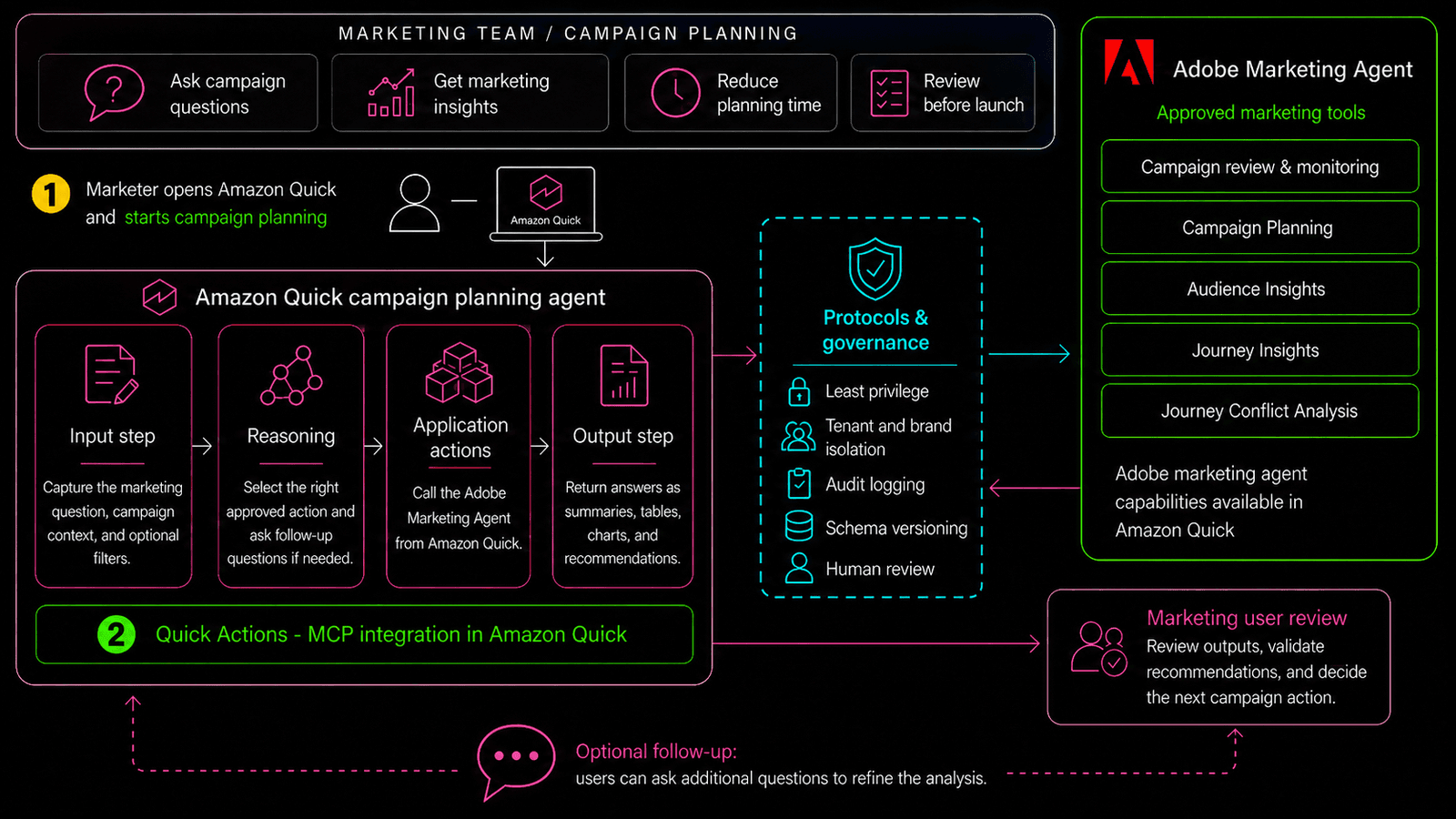
Speed Up Your Campaign Workflow with Adobe Marketing Agent on Amazon Quick
AI Guides

Speed Up Your Campaign Workflow with Adobe Marketing Agent on Amazon Quick

Learn how to configure Adobe Marketing Agent for Amazon Quick, pull audience insights, and cut campaign prep time with a step‑by‑step guide.

Jun 24, 20264 min readRead article

Latest AI for Small Business Articles

Related AI Topics

Related AI Searches

AI for Small Business FAQ

What is the best AI tool for small business owners?

The best tool depends on the task. small business owners should compare writing, research, documents, visuals, automation, privacy, and review time before choosing.

Are free AI tools enough for small business owners?

Free tools are often enough for testing and light workflows, but paid plans may be needed for higher limits, files, team controls, or advanced models.

How should I compare AI tools?

Use the same input, same prompt, same required output, and the same review checklist. Compare the usable final result, not the first demo.

Can I trust AI answers?

Use AI to draft, structure, summarize, and compare. Verify important facts, citations, calculations, code, legal claims, health claims, and financial claims.

What should I avoid uploading?

Avoid private customer data, student records, credentials, contracts, confidential business files, or regulated data unless your account and organization policy allow it.

How often should this workflow be reviewed?

Review it monthly or whenever pricing, model access, team policy, or the quality of outputs changes.