Problem: Scaling Compliance Checks with AI without Losing Control
Financial institutions must verify millions of transactions every day, flag suspicious activity, and keep audit trails that satisfy regulators. Manual review is slow, error‑prone, and costly. Large language models promise to read transaction data, interpret policy language, and suggest actions, but turning a research prototype into a service that runs 24/7, respects privacy, and stays within budget is a different challenge. According to the AWS Machine Learning Blog (June 26 2026), Stripe faced exactly this problem when it needed an AI‑driven compliance layer that could handle real‑world volume while staying auditable.
Prerequisites: What You Need Before You Start
- Core infrastructure on AWS. Stripe built its agent service on Amazon SageMaker for model hosting, Amazon S3 for data storage, and Amazon EventBridge for orchestration.
- A clear compliance policy. The AI must know the rules it is enforcing – AML, KYC, transaction limits, etc. Document these rules in a machine‑readable format (JSON or YAML) before you train or prompt any model.
- Access to a capable LLM. Stripe used a commercially‑available large language model that could understand policy language and generate structured responses.
- Human‑in‑the‑loop tooling. A lightweight UI or ticketing system where compliance officers can review, correct, and approve AI suggestions.
- Monitoring and alerting stack. CloudWatch metrics, logs, and a dashboard to watch latency, error rates, and cost.
Steps: Building a Production‑Ready Agent Service
1. Adopt a ReAct‑style agent framework
The ReAct pattern mixes reasoning (thought) and acting (tool use) in a single loop. Stripe wrapped this pattern in a microservice that receives a compliance request, asks the LLM to think, then calls external tools (databases, risk scores) as needed. Implement the loop as follows:
- Receive a JSON request containing transaction details.
- Prompt the LLM with the request plus the relevant policy snippet.
- Parse the LLM’s “thought” output to decide which tool to invoke (e.g., a risk‑score service).
- Call the tool, attach the result to the next prompt, and repeat until the LLM produces a final decision.
This approach keeps the agent deterministic enough for audit while still benefiting from LLM flexibility.
2. Containerize the agent logic
Package the ReAct loop in a Docker container and deploy it to SageMaker endpoints. SageMaker gives you auto‑scaling, version control, and built‑in A/B testing. Stripe’s team used SageMaker to spin up a dedicated endpoint for compliance agents, separating it from customer‑facing models.
3. Implement prompt caching for cost control
Many compliance checks repeat the same policy language. Stripe saved compute dollars by caching the embeddings of static policy prompts. Store the cached vectors in Amazon DynamoDB keyed by a hash of the policy text. When a new request arrives, look up the cache first; if a hit occurs, skip the LLM call and reuse the cached response.
4. Wire up task decomposition and orchestration
Complex compliance checks often break into sub‑tasks: identity verification, transaction risk scoring, and regulatory rule matching. Stripe used Amazon EventBridge to publish each sub‑task as an event, allowing independent workers to process them in parallel. Design your system so that each sub‑task emits a success or failure event that the main ReAct loop can consume.
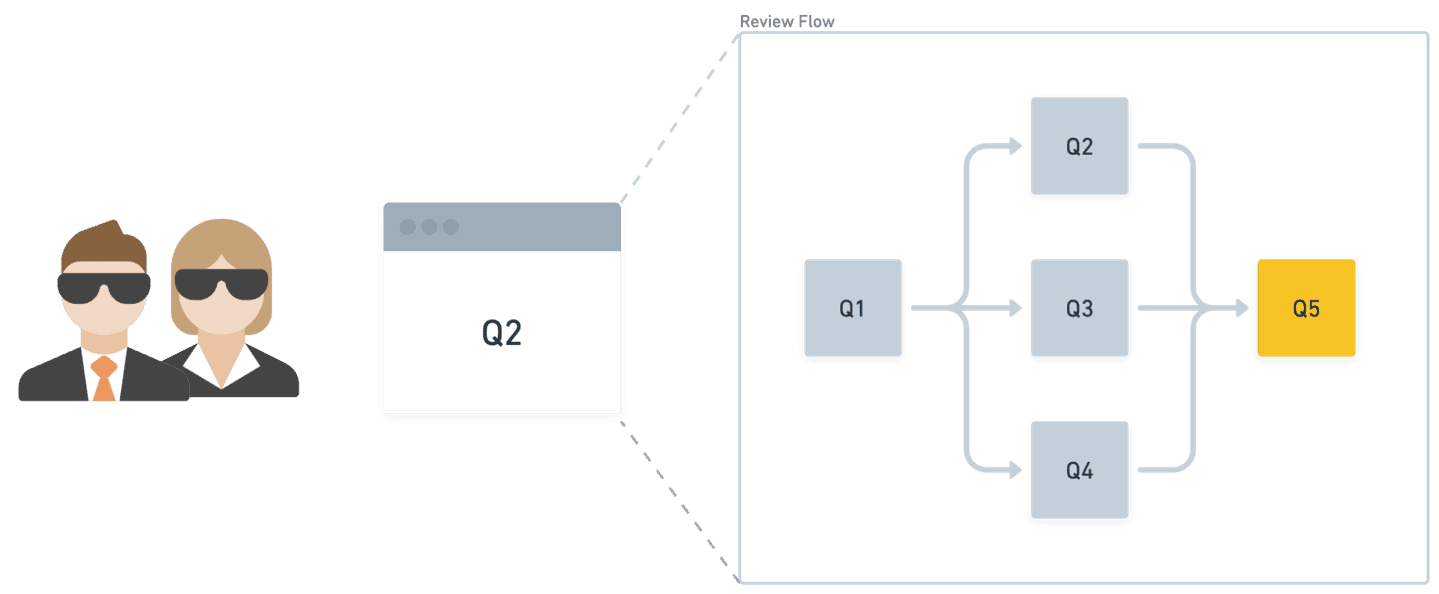
5. Add human oversight at the decision point
Even with a strong LLM, regulators require a human to sign off on high‑risk decisions. Stripe built a simple review UI that surfaces the LLM’s reasoning, tool outputs, and the final recommendation. Compliance officers can edit the recommendation or reject it outright. The UI writes the final decision back to a persistent store, creating an immutable audit trail.
6. Log everything for traceability
Every prompt, tool call, and human action should be logged with timestamps, request IDs, and user IDs. Stripe sent these logs to Amazon CloudWatch Logs and exported them nightly to an S3 bucket for long‑term retention. This log stream becomes the source of truth for internal audits and external regulator inquiries.
7. Monitor performance and cost in real time
Set CloudWatch alarms on latency (e.g., > 500 ms per loop), error rates (e.g., > 1 % failed LLM calls), and cost metrics (e.g., prompt‑caching hit ratio). Stripe’s team used these alarms to trigger automatic scaling policies and to alert engineers before a cost overrun.
8. Conduct regular safety reviews
Because the LLM can hallucinate, Stripe scheduled weekly “safety sprints” where engineers replay a sample of recent decisions, check for policy drift, and update prompt templates. Treat these reviews as part of your compliance calendar.
Pro Tips: Fine‑Tuning the System for Real‑World Use
- Version policies, not just models. Store each policy revision as a separate version in S3. Tag LLM prompts with the policy version so you can reproduce decisions later.
- Use low‑temperature sampling for deterministic output. Stripe found that a temperature of 0.1 reduced variance in the LLM’s reasoning, making audits simpler.
- Leverage batch processing for overnight bulk checks. When volume spikes, queue requests in Amazon SQS and let a batch worker process them with the same ReAct loop, reusing cached prompts.
- Integrate with existing fraud platforms. Instead of reinventing risk scores, call your legacy fraud engine as a tool inside the ReAct loop – Stripe did this to keep legacy investments alive.
- Document edge cases. Keep a living “known‑issues” wiki that records situations where the agent failed or required human correction. This documentation helps regulators see continuous improvement.
By following these steps and tips, you can move from a proof‑of‑concept LLM to a production‑grade AI agent that handles financial compliance at scale, just as Stripe did.
📎 Related Articles
AWS launches Continuum and Context to secure AI agents • Deploy Local AI Agents on RTX PCs & DGX Spark • How to Turn Your SOC Analyst Into an AI Agent • How to Deploy Agentic Gemini Models After I/O 2026
Explore related AI topics