Thesis
Google’s Dialogues stage at I/O 2026 is less a showcase of isolated gadgets and more a clear signal that the company is weaving generative AI into the fabric of daily work, communication, and even subscription economics.
Evidence from the Dialogues
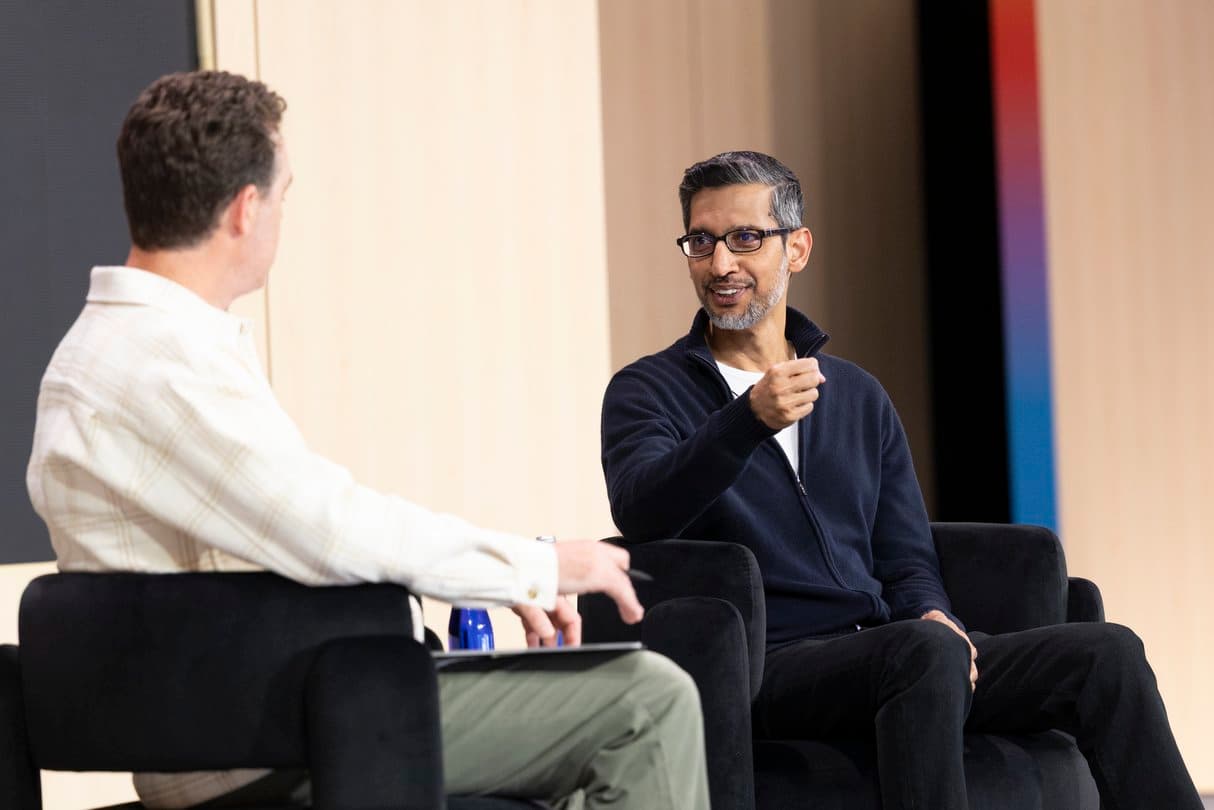
According to the Google AI Blog recap of the Dialogues, leaders on the stage discussed the future of AI, quantum computing, robotics and creativity. The conversation highlighted how generative models will power not only research‑intensive fields like quantum simulation but also routine creative tasks. No product launch was announced on the stage itself, yet the thematic emphasis on “AI‑first” thinking was unmistakable.
The same blog post notes that the Dialogues served as a platform for cross‑disciplinary dialogue, suggesting Google intends to align its hardware, cloud, and consumer divisions under a common AI narrative.
Context within Google’s broader AI push
Three days after the Dialogues, Google unveiled a suite of concrete tools that embody the ideas spoken about on stage. The Google Beam experiment, detailed in a May 20 post, lets participants see and hear colleagues in true‑to‑life size and sound, aiming to make hybrid meetings feel more inclusive and connected. By projecting lifelike avatars, Beam translates the abstract promise of “AI‑enhanced collaboration” into a tangible experience.
On May 19, Google announced new voice capabilities across Gmail, Docs, and Keep, a design tool called Google Pics, and updates to AI Inbox. These features embed conversational AI directly into the productivity stack, turning the “future of work” discussion into everyday actions—dictate an email, sketch a visual, or let an AI sort your inbox without opening a separate app.
The same day, Google rolled out a $100 AI Ultra subscription plan, alongside refreshed benefits for AI Plus and Pro tiers. The pricing tier signals that Google expects a segment of users to pay for premium, always‑on AI assistance, from advanced coding suggestions to higher‑quality image generation.
When viewed together, the Dialogues, Beam, Workspace upgrades, and subscription tiers illustrate a coordinated strategy: democratize AI‑driven interaction while monetizing the higher‑end experience.
Counter‑Arguments and Skepticism
Critics could argue that the Dialogues were more hype than substance, noting the absence of a flagship product reveal. Some observers worry that the $100 AI Ultra plan may price out small teams, reinforcing a divide between well‑funded enterprises and independent creators.
Another point of contention is the reliance on lifelike avatars for hybrid meetings. While the Beam experiment promises inclusivity, skeptics question whether realistic rendering will truly bridge the psychological gap between in‑person and remote participants, or simply add a layer of novelty that fades.
Finally, embedding voice AI into core Workspace apps raises privacy concerns. Users may wonder how conversational data is stored, especially when AI models improve through continual learning.
Prediction for the Next Year
If the themes from the Dialogues continue to materialize, we can expect three concrete developments by mid‑2027. First, Beam‑style avatars will likely graduate from experimental labs to a beta feature in Google Meet, offering real‑time spatial audio and video synthesis for a broader user base. Second, the AI Ultra subscription will expand to include priority access to emerging quantum‑ready APIs, tying the earlier quantum discussion to a revenue stream. Third, Workspace will roll out a unified AI assistant that can switch contexts—draft an email, generate a slide, then schedule a meeting—without leaving the current document.
These moves would cement Google’s claim that AI is no longer an add‑on but the default interface for work and creativity.
📎 Related Articles
Google I/O 2026: 100 Announcements Signal an Aggressive Shift Toward Integrated AI • Google I/O 2026 Dialogues: The Push Toward a Unified AI Ecosystem • Google I/O 2026 Dialogues: From AI Talk to Everyday Reality • Why Google’s I/O 2026 Announcements Signal a Shift, Not a Sprint • Dialogues Stage vs Google AI Products I/O 2026: Which Has More Impact? • Google I/O 2026 Dialogues: Why AI Integration Is Now an Expectation, Not a Feature • Google’s I/O 2026: 100 Announcements and What They Mean • Google I/O 2026 Dialogues: AI Moves From Demo to Daily Core