Thesis
Google’s Gemini 3.5 marks the first moment where a mainstream large‑language model is officially marketed as an "agentic" system, blurring the line between conversation and execution. The claim is bold: intelligence that not only answers but also acts.
Evidence
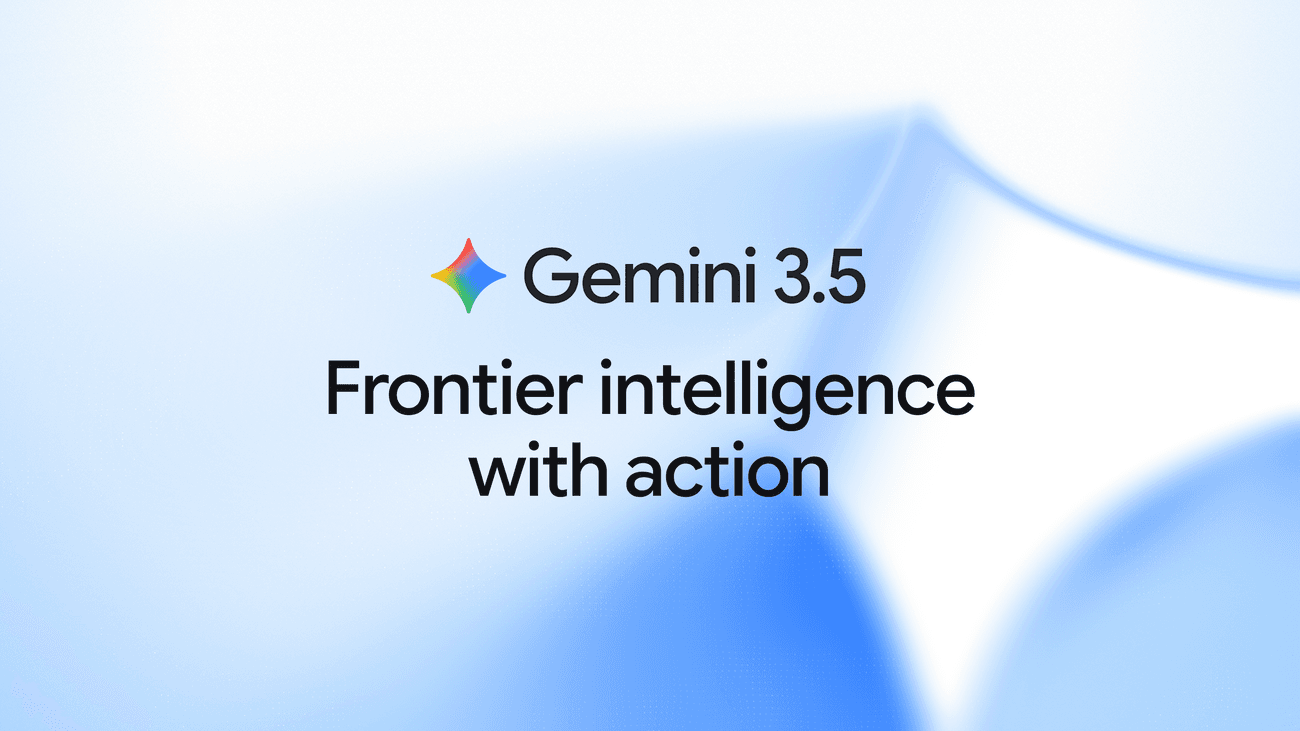
At the May 19 I/O keynote Google introduced Gemini 3.5 as "frontier intelligence with action" (Google AI Blog, 2026‑05‑19). The same day a follow‑up post titled "Welcome to the agentic Gemini era" framed the release as a tool that helps users "get more done" (Google AI Blog, 2026‑05‑19). Both posts emphasize that Gemini now integrates decision‑making loops, allowing it to trigger APIs, schedule events, and manipulate software on behalf of the user.
Google’s messaging is explicit: Gemini 3.5 is not a mere upgrade in fluency; it is a step toward autonomous agents that can learn from feedback and improve through trial‑and‑error. The blog images show a model diagram with a new "action" node feeding into external services, reinforcing the claim that the model can close the loop between perception and actuation.
Context
The push toward agency aligns with broader industry moves. On May 13 NVIDIA announced a partnership with Ineffable Intelligence, the London lab founded by AlphaGo architect David Silver, to build reinforcement‑learning (RL) infrastructure (NVIDIA Newsroom, 2026‑05‑13). The collaboration aims to turn raw computation into knowledge via agents that learn by trial and error. While NVIDIA’s effort targets the hardware and tooling side, Google’s Gemini 3.5 targets the model side, suggesting a convergence of powerful RL back‑ends with high‑level language understanding.
Reinforcement learning has long been the engine behind agents that can act in complex environments. By marrying Gemini’s linguistic capabilities with RL‑friendly pipelines, Google positions its model to benefit from the same feedback loops that NVIDIA and Ineffable are optimizing. The timing is noteworthy: a week after NVIDIA’s announcement, Google rolls out an agentic model, hinting at a coordinated acceleration in the field.
Counter‑Arguments
Enthusiasm for agency meets practical concerns. A May 24 article in The Decoder warned that leaving model selection on default in tools like Copilot, Gemini, and other AI assistants can produce misleading outputs (The Decoder, 2026‑05‑24). The piece cites a case where Microsoft Copilot invented false country differences because the user relied on the default model. The lesson applies to Gemini 3.5: if users do not understand which version of the model they are invoking, they may trust actions that are poorly calibrated.
Safety is another friction point. An agent that can execute code or modify settings must be guarded against unintended behavior. Google’s posts do not detail safeguards, and the broader community has yet to see independent audits of Gemini’s action layer. Critics argue that marketing a model as "agentic" before robust guardrails are public could set unrealistic expectations and invite misuse.
Prediction
If Gemini 3.5 lives up to its promise, developers will begin building hybrid applications that blend natural‑language prompting with automated workflows. Expect a surge in third‑party extensions that connect Gemini to calendars, CRM systems, and cloud services, much like the early plugin ecosystems that grew around GitHub Copilot.
At the same time, the need for transparent model selection and stronger safety protocols will become a competitive differentiator. Companies that provide clear versioning, audit trails, and user‑controlled permission scopes will likely capture the most enterprise trust.
In the longer view, Gemini 3.5 could be the catalyst that pushes the AI industry from static text generators into a generation of truly interactive agents. Whether that transition accelerates productivity or amplifies risk will depend on how quickly the ecosystem builds responsible tooling around the new capabilities.
📎 Related Articles
OpenAI’s Codex Takes the Lead in Enterprise Coding Agents • OpenAI’s Gartner Lead Shows AI Coding Agents Are Now Core Enterprise Tools • Gemini 3.5 vs the Competition: Which AI Assistant Delivers Real Action? • OpenAI Tops Gartner’s Coding Agent Quadrant • Google AI bets on Missouri to grow next‑gen tech talent • Why Gartner’s Coding Agent Crown Signals a Shift in Enterprise Software • Google AI pledges Missouri workforce and energy boost • Google AI's Missouri Investment Signals New Workforce Focus