By AITREND AI Editorial
Thesis
Google’s Dialogues stage at I/O 2026 makes clear that artificial intelligence is no longer a side attraction; it is becoming the engine that powers every Google product, sold through tiered subscriptions and woven into the fabric of daily work.
Evidence
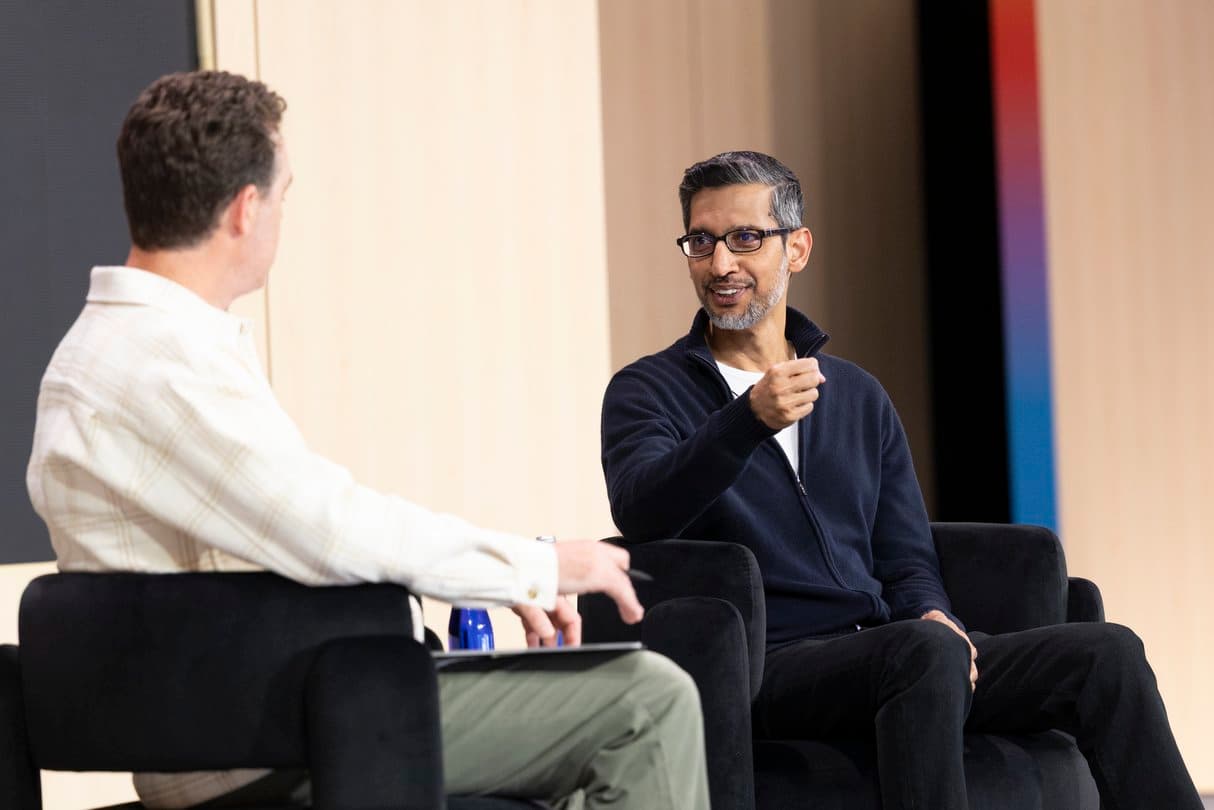
According to the official recap on the Google AI Blog, the Dialogues sessions covered AI, quantum computing, robotics and creativity, framing AI as the common thread that links these disparate fields. The same blog announced a $100 “AI Ultra” subscription tier, adding to the existing Google AI Plus and Pro plans. This premium tier promises faster model access, higher quota limits and early‑beta features across the ecosystem.
In the same week, Google unveiled new voice capabilities for Gmail, Docs and Keep, allowing users to compose, edit and retrieve information hands‑free. A fresh design tool called Google Pics entered the Workspace suite, letting creators generate visual assets with simple prompts. Both upgrades appeared in a separate Workspace update post, reinforcing that AI is being embedded directly into the productivity stack.
Hybrid collaboration received a visual upgrade with Google Beam’s “true‑to‑life size” avatars, a feature highlighted in a dedicated Beam experiment blog. The experiment promises lifelike sound and presence for remote participants, a clear attempt to make AI‑enhanced video feel as natural as sitting across a table.
All four posts share a common timestamp: late May 2026, just days after the Dialogues stage, indicating a coordinated rollout. The subscription pricing, voice integration, design tool launch and Beam experiment together illustrate a multi‑pronged strategy to monetize AI while making it indispensable.
Context
Google’s I/O has traditionally been a showcase for hardware, Android updates and cloud services. Over the past few years, AI has moved from research demos to product features, but the Dialogues stage marks the first time the conference dedicated a whole segment to discussing AI’s role across the company’s portfolio.
The introduction of AI‑centric subscription plans mirrors a broader industry shift toward recurring revenue. By bundling faster model inference, higher token limits and early access under a $100 monthly fee, Google signals that AI resources will be treated like any other cloud service—consumable, measurable, and billable.
Embedding voice controls into core Workspace apps removes friction for users who have already grown accustomed to AI assistants in search and Maps. The addition of Google Pics expands AI from text‑only assistance to visual creation, hinting at a future where a single prompt can generate copy, graphics and even code.
Google Beam’s lifelike avatars address a lingering pain point of hybrid meetings: the sense of disconnect when remote participants appear as tiny squares. By using AI‑driven spatial audio and high‑resolution rendering, Beam tries to recreate the feeling of sitting at a shared table, a move that could redefine corporate meeting standards.
Counter‑Arguments
Critics may argue that a $100 monthly AI Ultra plan puts advanced capabilities out of reach for small teams and freelancers, effectively creating an AI divide. The price point, while competitive for enterprises, could limit broader adoption and reinforce Google’s dominance among well‑funded customers.
Privacy advocates will likely question how deeply AI is embedded in communication tools. Voice‑enabled Gmail and Docs mean more user speech is processed by Google’s models, raising concerns about data retention and consent.
There is also the risk of AI fatigue. As AI features proliferate across every app, users might feel overwhelmed by constant suggestions, prompts and model‑driven assistance, leading to disengagement rather than productivity gains.
Finally, the subscription model could invite scrutiny from regulators monitoring market concentration in AI services. Bundling AI capabilities with existing Google products may be seen as leveraging monopoly power to lock users into a single ecosystem.
Prediction
If the Dialogues narrative holds, we will see a rapid expansion of AI‑first subscription tiers, perhaps a lower‑cost “AI Starter” aimed at indie developers and students. Google is likely to roll out more AI‑enhanced features across its suite—think AI‑generated spreadsheets in Sheets, automated video edits in YouTube Studio, and deeper integration of quantum‑inspired optimization in Cloud services.
Hybrid work will become increasingly immersive. Beam’s avatar technology will mature into a standard offering for Google Workspace, potentially replacing traditional video conferencing for large enterprises.
Competitors will feel pressure to match Google’s subscription pricing and feature set, accelerating the industry’s move toward AI as a utility rather than a novelty. The net effect will be a market where AI consumption is measured, billed, and expected in the same way as storage or compute.
In short, the Dialogues stage does more than showcase futuristic concepts; it maps out a business model where AI is the default layer on every Google product, paid for by subscription, and measured by usage. The next few years will test whether users embrace this model or push back against an AI‑heavy, subscription‑driven ecosystem.
📎 Related Articles
Google I/O 2026 Dialogues: The Push Toward a Unified AI Ecosystem • Google I/O 2026 Dialogues Reveal an AI‑First Office • Google I/O 2026 Dialogues: Why AI Integration Is Now an Expectation, Not a Feature • Google I/O 2026 Dialogues: Why the Talk Matters More Than the Tech • Google I/O 2026 Unveils a Hundred New Tools – What It Means • Why Google’s I/O 2026 Announcements Signal a Shift, Not a Sprint • Google Workspace Gets Voice, Visuals and AI Inbox Upgrades • Google’s I/O 2026 Blitz: 100 Announcements Point to an AI‑First Future