Thesis
Google’s flood of 100 announcements at I/O 2026 signals an aggressive shift from a collection of independent products to a tightly woven AI‑first ecosystem that blurs the line between creator, collaborator, and consumer.
Evidence
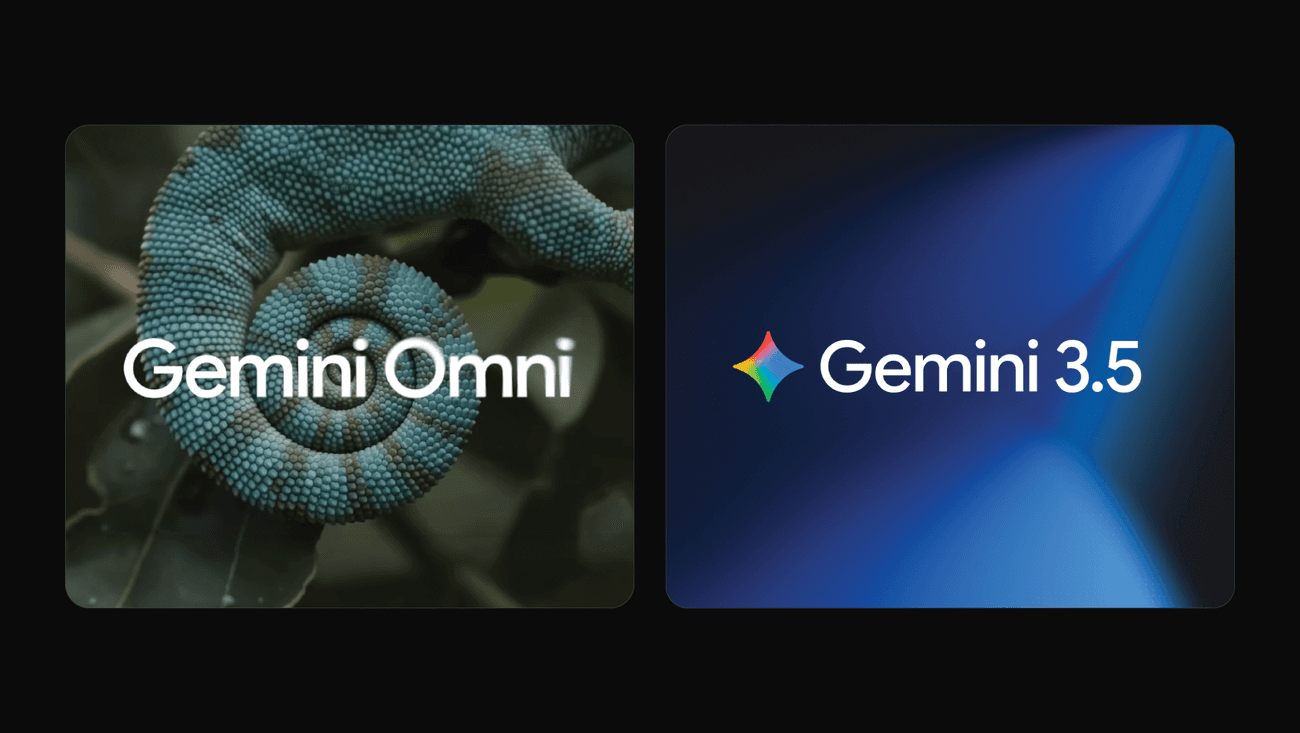
According to the Google AI Blog’s “100 things we announced at I/O 2026” post, the company introduced a suite of headline‑grabbing projects such as Gemini Omni, Google Antigravity, and the Universal Cart. At the same event, Google also rolled out new voice capabilities across core Workspace apps—Gmail, Docs, and Keep—plus a fresh design tool called Google Pics and enhancements to the AI‑driven Inbox.source
The Gemini Omni name suggests a model that can operate across modalities, while Antigravity and Universal Cart hint at hardware‑software convergence. Meanwhile, the Workspace updates demonstrate a push to embed conversational AI directly into everyday productivity tools, turning typing and clicking into speaking and gesturing.
Context
Google’s I/O keynote has traditionally been a showcase for incremental improvements. This year’s 100‑item roster marks a departure from that rhythm. By grouping a hardware‑flavored offering (Antigravity) with pure‑software services (Gemini Omni, AI Inbox), Google appears to be betting on a future where AI is the connective tissue across all user experiences.
The timing aligns with a broader industry trend where cloud providers and device makers are positioning AI as the primary interface. Google’s decision to surface voice controls in Gmail, Docs, and Keep mirrors a growing expectation that users will converse with their work apps as naturally as they do with virtual assistants.
Counter‑Arguments
Critics may argue that announcing 100 products at once dilutes focus and risks overpromising. Skeptics could point out that the lack of detailed specifications—particularly for ambitious‑sounding projects like Antigravity—makes it hard to gauge feasibility. Additionally, integrating voice into core Workspace apps could raise concerns about privacy, data security, and the learning curve for users accustomed to text‑based workflows.
Another line of criticism centers on ecosystem lock‑in. By weaving AI deeply into Gmail, Docs, and the new AI Inbox, Google may be tightening its grip on user data, prompting enterprises to question vendor dependence.
Prediction
If Google follows through, the next 12‑18 months will see a gradual migration of routine tasks—from drafting emails to visual design—into conversational AI flows. Gemini Omni could become the backend engine powering these experiences, while Antigravity and Universal Cart may materialize as niche hardware extensions for developers and power users.
Enterprises are likely to pilot the voice‑enabled Workspace suite in low‑risk environments, measuring productivity gains against security overhead. Success will hinge on how quickly Google can demonstrate tangible efficiency improvements without sacrificing data stewardship.
Ultimately, the I/O 2026 announcements lay out a roadmap: an AI‑first stack that starts in the cloud, reaches into the office suite, and eventually lands on the user’s desk or lap. Whether the vision materializes will depend on execution, user adoption, and the industry’s response to a rapidly expanding AI footprint.
📎 Related Articles
Google I/O 2026 Dialogues Reveal an AI‑First Office • Google I/O 2026 Dialogues: The Push Toward a Unified AI Ecosystem • Google I/O 2026 Dialogues: Why the Talk Matters More Than the Tech • Google’s Missouri Investment Aims to Rewrite the State’s AI Future • Google I/O 2026 Dialogues vs Product Announcements: Which Stands Out? • Google I/O 2026 Dialogues: Why AI Integration Is Now an Expectation, Not a Feature • Google I/O 2026 rolls out 100 new tools and services • OpenAI’s Codex Takes the Lead in Enterprise Coding Agents