Thesis
Google’s Dialogues stage at I/O 2026 is not a showcase of isolated gadgets; it is a declaration that the next generation of work will be built on a single, AI‑powered fabric that stitches together email, documents, design, and even the physics of hybrid meetings.
Evidence from the Stage
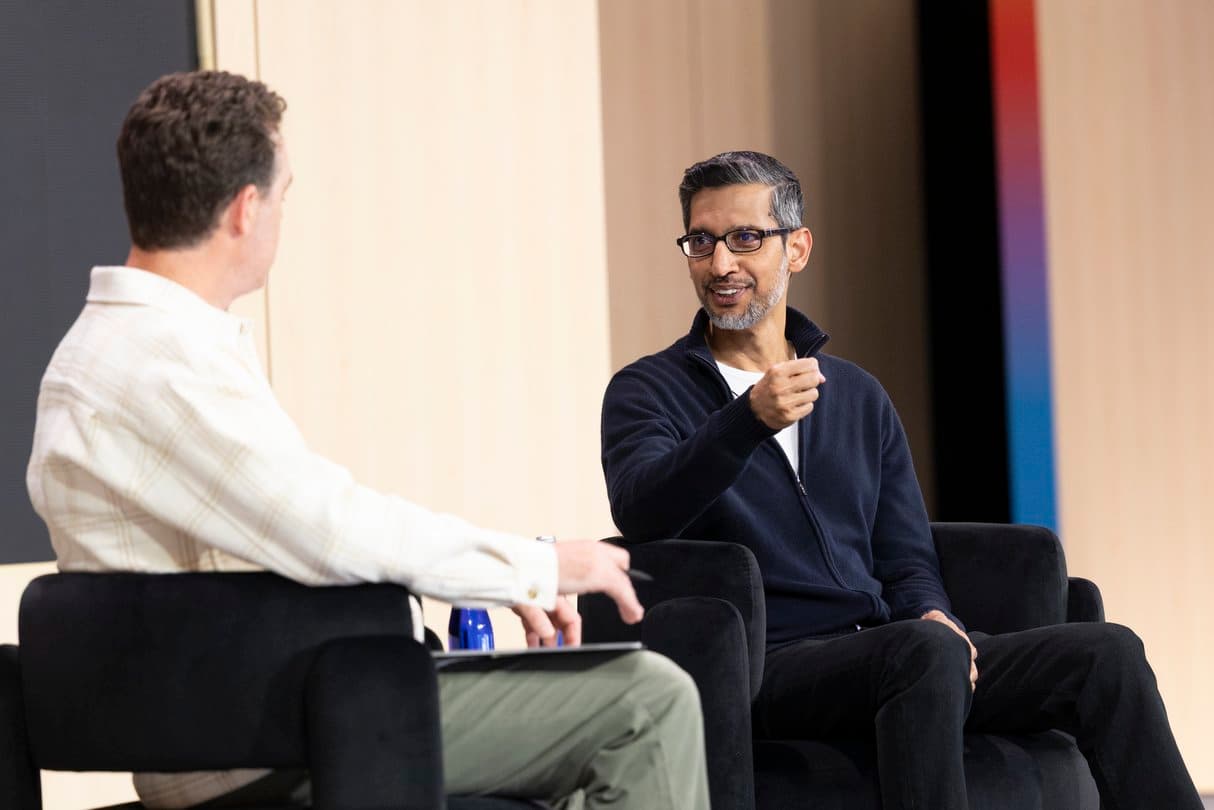
According to the Google AI Blog’s recap of the Dialogues, leaders on stage debated the future of AI, quantum computing, robotics and creativity (https://blog.google/innovation-and-ai/technology/ai/io-2026-dialogues-recap/). While the transcript is brief, the surrounding announcements give concrete shape to that discussion.
In the same week, Google unveiled new voice capabilities across Gmail, Docs and Keep, allowing users to dictate, edit and summarize content without lifting a finger (https://blog.google/products-and-platforms/products/workspace/workspace-updates/). The rollout of Google Pics, a design‑focused tool, signals that generative AI is moving from text to visual creation within Workspace.
Hybrid collaboration received a hardware‑software boost with Google Beam’s experimental group‑meeting feature that projects colleagues at true‑to‑life size and sound, making remote participants feel present (https://blog.google/innovation-and-ai/models-and-research/google-research/google-beam-group-meetings/). The experiment is framed as a direct response to the AI‑driven meeting‑assistant tools highlighted during Dialogues.
Finally, the subscription tier overhaul introduced an $100 AI Ultra plan, alongside upgraded benefits for AI Plus and Pro users, suggesting that Google expects enterprises to pay a premium for deeper AI integration (https://blog.google/products-and-platforms/products/google-one/google-ai-subscriptions/).
Context: The AI‑First Momentum
Google’s announcements are a micro‑cosm of a broader industry shift. Large language models have moved from research labs to everyday productivity tools, and competitors are racing to embed similar capabilities in email, document editing, and video conferencing. By aligning its product roadmap under the Dialogues banner, Google signals that its AI work is no longer an add‑on but the core of its user experience.
The timing is strategic. I/O 2026 arrives just months after the release of the latest Gemini model family, which powers the new voice features and the AI Ultra subscription tier. The convergence of model improvements, cloud infrastructure, and hardware experiments like Beam creates a fertile ground for a unified AI layer across Google’s ecosystem.
Counter‑Arguments and Skepticism
Critics point out that many of the announced features are still in experimental mode. The Beam group‑meeting capability, for instance, is described as an “experiment” rather than a product ready for mass deployment. Without clear performance metrics—latency, audio fidelity, or privacy safeguards—organizations may hesitate to overhaul existing meeting workflows.
Another concern is the cost barrier. The AI Ultra plan sits at $100 per month, a price point that could price out small businesses and individual power users. While Google positions the tier as a gateway to “deep AI integration,” the value proposition remains unproven until real‑world productivity gains are quantified.
Finally, the rapid rollout of voice‑first tools raises questions about accessibility and error rates. Early adopters have reported transcription inaccuracies in noisy environments, suggesting that the technology may still need refinement before it can replace traditional typing for most professionals.
Prediction: An Integrated AI Workspace by 2028
If Google’s current trajectory holds, the next two years will see three concrete outcomes. First, the experimental Beam technology will mature into a standard offering within Google Meet, providing spatial audio and lifelike avatars powered by generative AI. Second, the AI Ultra subscription will evolve from a premium tier into a baseline for enterprise Workspace licenses, bundling voice drafting, AI‑generated design assets, and advanced meeting assistance into a single price.
Third, the Dialogues‑driven narrative will push Google’s internal product teams to converge on a single AI API stack, reducing fragmentation between Gmail, Docs, Keep, and the new Pics tool. By 2028, the average user could start a meeting, draft an agenda, design a slide, and send a follow‑up email—all with voice commands and AI suggestions, without ever opening a separate application.
The stakes are high. Success would cement Google’s claim to the “AI‑first” office; failure could open space for rivals who deliver more reliable, cost‑effective solutions. The Dialogues stage, therefore, is less a showcase and more a litmus test for Google’s ability to turn hype into habit.