Thesis
Google’s Dialogues stage at I/O 2026 proves that the company is no longer treating artificial intelligence as a novelty; it is weaving AI into the fabric of everyday work, from email composition to hybrid meetings, and packaging that integration behind a tiered subscription model.
Evidence
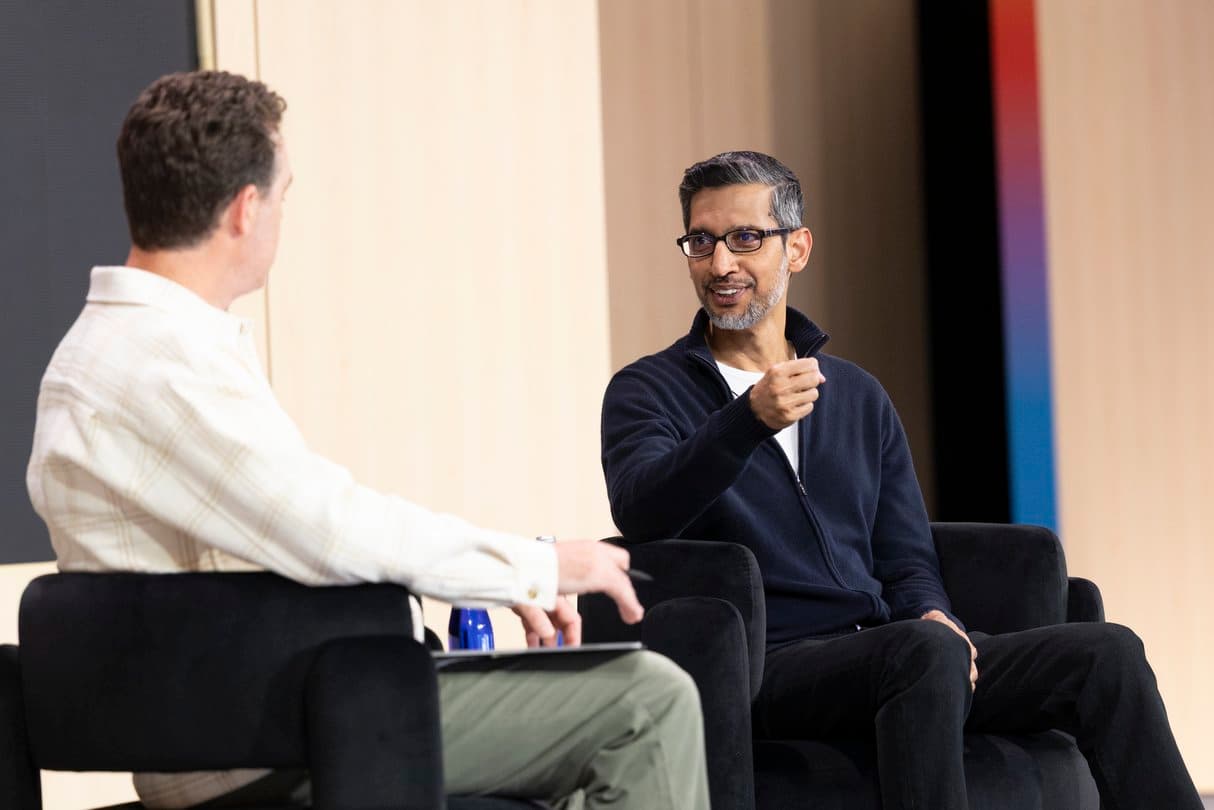
The official recap of the Dialogues stage notes that leaders discussed the future of AI, quantum computing, robotics and creativity (Google AI Blog, 2026-05-22). In the same week, Google announced a set of concrete product upgrades that echo those themes. A new experiment called Google Beam lets participants see and hear colleagues at true-to-life size and sound, promising a more inclusive hybrid meeting experience (Google AI Blog, 2026-05-20). Workspace received voice‑enabled features across Gmail, Docs and Keep, as well as a new design tool named Google Pics and refreshed AI Inbox capabilities (Google AI Blog, 2026-05-19). Finally, Google unveiled an AI Ultra subscription plan priced at $100, alongside new benefits for AI Plus and Pro tiers (Google AI Blog, 2026-05-19). All of these announcements were made within days of the Dialogues session, forming a tightly linked evidence set.
Context
Earlier I/O events often highlighted AI as a research showcase—large language models, image generators, and experimental robotics demos. This year’s Dialogues stage shifted the conversation toward practical integration. By pairing the discussion of quantum computing and robotics with product rollouts that affect inboxes, documents, and meetings, Google signals a strategic pivot: AI is moving from the lab to the user’s daily screen.
The timing is also notable. The Beam experiment arrives at a moment when hybrid work remains the norm for many enterprises. By delivering “true‑to‑life size and sound,” Google addresses a lingering pain point—remote participants feeling peripheral. Voice capabilities in core Workspace apps bring conversational interaction to tasks that previously required typing, aligning with the broader industry push for hands‑free productivity.
The subscription announcement adds a commercial layer. By bundling advanced AI features into a $100 AI Ultra plan, Google creates a revenue stream that directly ties premium AI access to its cloud and consumer ecosystem. This mirrors a trend where AI is monetized not just as a cloud service but as an embedded layer within everyday software.
Counter‑Arguments
Critics may argue that these moves are incremental rather than transformative. The Beam experiment, while impressive, is still labeled an “experiment,” suggesting it may not reach all users. Voice features, though new, are extensions of existing speech‑to‑text tech and may not dramatically alter workflow without broader adoption. The AI Ultra plan’s price point could limit uptake to larger organizations, leaving most users on free tiers.
Privacy advocates might also question the depth of AI integration. Embedding AI in email, documents, and meetings means more data is processed by Google’s models. The sources do not detail how user consent or data handling will be managed, leaving a gap that skeptics can point to.
Prediction
If the Dialogues stage reflects a deliberate roadmap, we can expect three trends to accelerate over the next 12‑18 months. First, AI‑driven assistance will become a default expectation in Workspace; voice composition and design assistance will move from optional add‑ons to standard features. Second, hybrid meeting tools like Beam will graduate from experiment to a widely deployed service, especially as enterprises demand richer remote experiences. Third, subscription tiers will expand, with more granular AI capabilities unlocked at each level, nudging a larger share of users toward paid plans.
In sum, the Dialogues stage did more than showcase futuristic concepts; it stitched together a narrative where AI underpins the tools people already use, and where Google captures value through both product upgrades and subscription revenue. The real test will be how quickly these promises translate into everyday user habits.
📎 Related Articles
Google I/O 2026 Dialogues: Why AI Integration Is Now an Expectation, Not a Feature • Google I/O 2026 Dialogues: The Push Toward a Unified AI Ecosystem • Google I/O 2026 Dialogues Reveal an AI‑First Office • Google I/O 2026: Why 100 Announcements Aren’t All That Impressive • Google I/O 2026 Unveils a Hundred New Tools – What It Means • Why Google’s I/O 2026 Announcements Signal a Shift, Not a Sprint • Why Google I/O’s Dialogues Stage Signals an AI‑First Workplace • Google’s I/O 2026 Blitz: 100 Announcements Point to an AI‑First Future