Verdict
If you need on‑device AI assistants, coding helpers, or real‑time language models on a Windows laptop, RTX Spark is worth watching. Enterprises with strict data‑privacy rules and power users who dislike constant cloud latency should consider early‑adopter devices. Budget‑conscious students or casual users can skip it for now, as pricing and real‑world benchmarks remain undisclosed.
What It Does
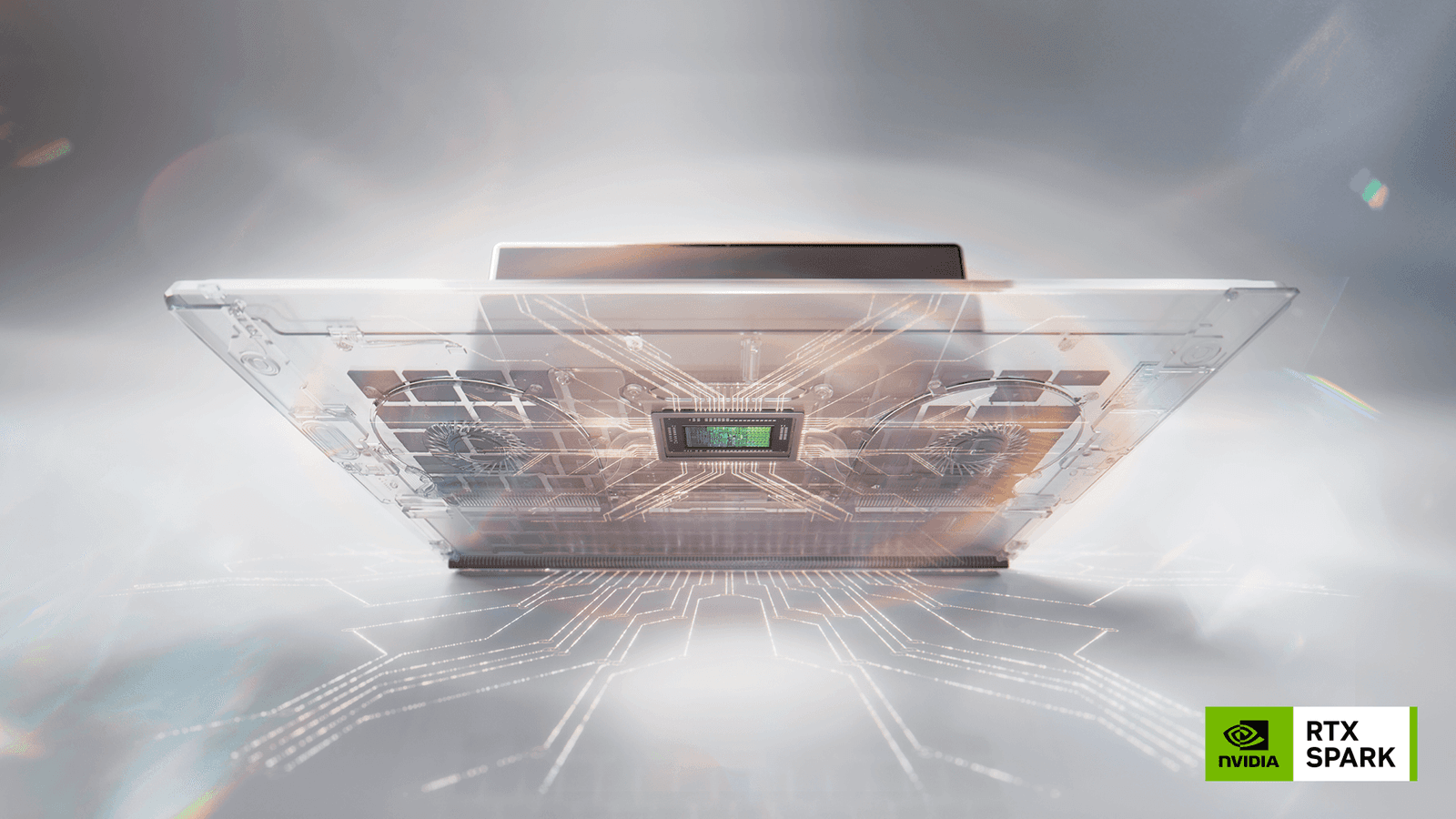
According to The Decoder, RTX Spark combines Nvidia’s Blackwell GPU architecture with an Arm‑based Grace CPU on a single package. The design shares up to 128 GB of memory between CPU and GPU, and Nvidia claims a theoretical 1,000 TOPS in FP4 precision – a metric aimed at inference workloads for large language models. The chip is slated for integration into Windows laptops from ASUS, Dell, HP, Lenovo, Microsoft Surface and MSI, with shipments expected in fall 2026.
The integration of a high‑performance GPU and a server‑grade CPU on a laptop‑sized die means developers can run sophisticated models without offloading to a remote server. In practice, that translates to faster response times for local AI agents, lower bandwidth usage, and the ability to keep sensitive data on the device.
Best Use Cases
- Enterprise data‑privacy tools. Companies that must keep customer data on‑premise can host classification or summarisation models directly on employee laptops.
- Real‑time code assistants. Developers working offline can run Codex‑style models for autocomplete and bug detection without a constant internet connection.
- Multimedia creation. Photo‑upscaling, video frame interpolation, and audio enhancement models run locally, avoiding upload delays.
- Edge AI in field work. Service technicians can query diagnostic models on a rugged Windows tablet, gaining instant insights.
Limits
The biggest unknown is price. Nvidia has not released a cost figure, and OEMs have not announced retail pricing for the first devices. Without pricing, it is hard to gauge total cost of ownership versus a subscription to Nvidia’s AI Cloud services, which are already available (NVIDIA Newsroom).
Thermal constraints on thin laptops may throttle sustained performance. The 1,000 TOPS claim is a peak figure measured in ideal conditions; real‑world workloads often see lower throughput due to memory bandwidth and power limits.
Software support is still emerging. While Windows now includes basic AI inference APIs, developers will need to adapt existing models to FP4 precision and the shared memory architecture.
Alternatives
For users who cannot wait for RTX Spark‑enabled hardware, Nvidia’s AI Cloud ecosystem offers scalable compute without upfront hardware cost (NVIDIA Newsroom). Companies can spin up GPU instances on demand, paying only for what they use. This approach sidesteps the unknown laptop price but reintroduces network latency and ongoing subscription fees.
Another path is to use existing high‑end laptops with discrete RTX 40‑series GPUs. While they lack the integrated Grace CPU and shared memory, they can still run many inference workloads, albeit with higher power draw.
For factory‑floor AI, Nvidia’s Factory Operations Blueprint (FOX) provides a reference design for plant‑wide intelligence (NVIDIA Newsroom). Though not a direct competitor, it shows Nvidia’s broader strategy to embed AI at the edge, which may influence future laptop designs.
Final Recommendation
RTX Spark positions itself as the first Windows‑focused chip built for local AI agents. Early adopters in regulated industries, developers who need offline code assistance, and power users who value privacy should keep an eye on the upcoming ASUS, Dell and other OEM offerings. Until pricing and real‑world performance numbers appear, most casual users are better served by cloud‑based solutions or existing high‑end GPUs.
📎 Related Articles
Local AI Agents on Nvidia‑Powered PCs Could Trim Cloud Bills • Critical Open‑Source Flaw Threatens Millions of AI Agents • Amazon Bedrock AgentCore streamlines AI sales agents • Enterprise AI Agents Face Readiness Gap, Endava Shows Path • Why Enterprises Must Redesign for Agentic AI • Salesforce AI agents slash migration from 231 to 13 days • Why Permissions, Not Model Power, Are Holding AI Agents Back • Permissions, Not Model Speed, Hold Back AI Agents
Explore topic hubs
AI News Today • AI Tools • Best AI Tools • ChatGPT Prompts • AI Agents