Thesis
Google’s I/O 2026 rollout of a hundred new AI‑driven products is less a showcase of quantity than a strategic sprint toward an AI‑first workflow, where intelligent assistance is baked into every click, voice command, and design decision.
Evidence
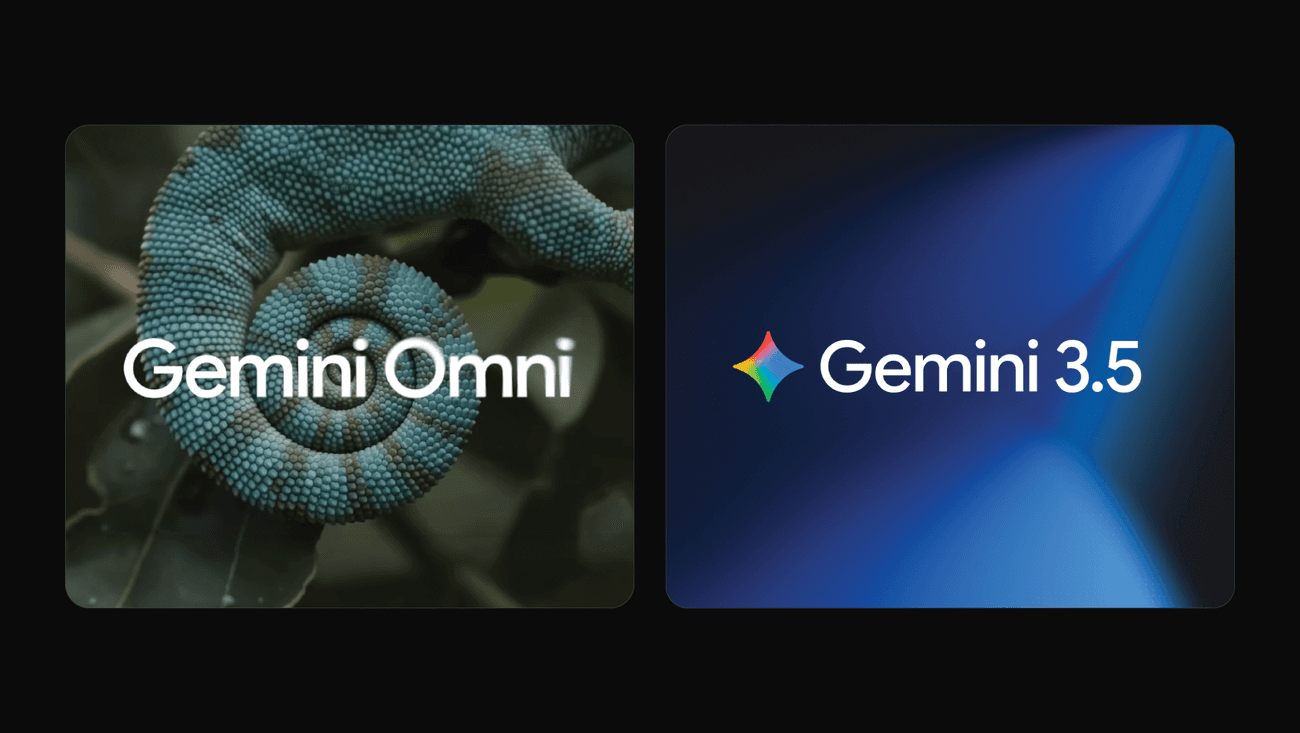
According to the Google AI Blog’s “100 things we announced at I/O 2026” post, the company highlighted headline offerings such as Gemini Omni, Google Antigravity, and the Universal Cart. While the announcement list spans a wide spectrum, the three named projects illustrate a pattern: a push for multimodal AI (Gemini Omni), experimental hardware‑software integration (Google Antigravity), and commerce‑centric automation (Universal Cart). The same blog also detailed a suite of Workspace upgrades, adding voice‑controlled actions in Gmail, Docs, and Keep, a new design‑focused tool called Google Pics, and refinements to the AI‑powered Inbox.
These updates are not isolated. Voice interaction now reaches the core productivity apps, allowing users to draft emails, annotate documents, and capture notes without touching a keyboard. Google Pics expands AI‑assisted visual creation beyond the traditional image editor, while AI Inbox promises smarter triage of incoming messages. Together, the announcements map a continuum from creative generation (Gemini Omni, Google Pics) to transactional efficiency (Universal Cart, AI Inbox).
Context
The 2026 I/O announcements arrive at a moment when enterprise software is rapidly adopting generative AI. Competitors have already embedded large language models into office suites, and developers are demanding APIs that can handle text, image, and code in a single request. Google’s Gemini family, introduced earlier in the year, already powers many of its consumer services. By branding a new iteration as “Omni,” the company signals an ambition to make the model truly cross‑modal—capable of interpreting and generating text, images, audio, and possibly video in a single workflow.
Google Antigravity, though described only by name, hints at a hardware experiment that could marry AI with physical interaction—perhaps a prototype for haptic feedback or gesture‑based control. The Universal Cart, meanwhile, aligns with the broader industry push to automate e‑commerce checkout, suggesting that Google intends to own more of the purchase funnel through AI‑driven recommendation and frictionless payment.
Within Workspace, the addition of voice capabilities mirrors the growing expectation that hands‑free interaction will become the default in remote and hybrid work environments. Google Pics extends AI‑assisted design beyond static image editing, potentially integrating generative imagery directly into presentations and marketing collateral. Updates to AI Inbox reflect a trend toward proactive email management, where the system not only suggests replies but also prioritizes, categorizes, and schedules follow‑ups.
Counter‑Arguments
Critics could argue that a list of a hundred announcements dilutes focus, turning the event into a marketing fireworks display rather than a coherent product strategy. The lack of detailed specifications for flagship items—Gemini Omni, Antigravity, Universal Cart—leaves room for skepticism about readiness and real‑world impact. Moreover, adding voice controls to Workspace may be perceived as a gimmick if latency, accuracy, or privacy concerns are not addressed.
Another line of criticism points to the potential for feature overload. Users accustomed to the simplicity of Gmail or Docs might find the barrage of AI options confusing, leading to lower adoption rates. Finally, enterprises that have already invested heavily in rival AI platforms could view Google’s rapid rollout as a disruptive threat rather than an invitation to collaborate, prompting resistance or slower migration.
Prediction
If Google can translate the breadth of its I/O announcements into reliable, integrated experiences, the company will likely solidify its position as the default AI layer for both consumer and enterprise productivity. Gemini Omni could become the backbone for multimodal queries across Search, Maps, and Workspace, while voice‑first interactions may set a new baseline for accessibility and speed in digital collaboration.
In the next 12‑18 months, we can expect the Universal Cart to pilot in select retail partners, offering AI‑curated product bundles and one‑click checkout. Google Antigravity, though still nebulous, may surface as a developer kit for AR/VR experiences that blend physical gestures with AI inference. Within Workspace, AI Inbox and Google Pics will likely evolve into proactive assistants that not only suggest content but also schedule meetings, generate visual assets, and auto‑populate project timelines.
Overall, the sheer volume of announcements suggests Google is betting on an ecosystem where AI is not an add‑on but the operating system. Success will hinge on execution, developer support, and the ability to keep user trust as AI becomes ever more intrusive in daily workflows.
📎 Related Articles
Why Google’s I/O 2026 Announcements Signal a Shift, Not a Sprint • Google I/O 2026 Dialogues Reveal an AI‑First Office • Google I/O 2026 Dialogues: The Push Toward a Unified AI Ecosystem • Google I/O 2026 Dialogues: Why the Talk Matters More Than the Tech • Google I/O 2026: Why 100 Announcements Aren’t All That Impressive • Google’s I/O 2026 Blitz: 100 Announcements Point to an AI‑First Future • Google’s I/O 2026: 100 Announcements and What They Mean • Why Google I/O’s Dialogues Stage Signals an AI‑First Workplace