Thesis
AI‑driven search assistants are being marketed as live researchers, yet the latest evidence suggests they often fall back on what they already know, confirming existing facts instead of truly scanning the web for up‑to‑date answers.
Evidence
According to The Decoder, two flagship agents—OpenAI’s GPT‑5.4 and Kimi’s K2.6—performed poorly on a new benchmark called LiveBrowseComp. The test deliberately restricts questions to events that occurred within the last 90 days, a window too narrow for models to rely on pre‑training memory. When asked about these recent events, the agents’ answers degraded sharply, and the previously stable ranking of models was upended.
The researchers at Harbin Institute of Technology designed LiveBrowseComp specifically to expose this weakness. By forcing a time‑bound query set, they removed the safety net of memorized facts. The result was a clear pattern: the agents would retrieve a web snippet that merely echoed their internal knowledge, rather than synthesising fresh information from the live page.
Context
Since the rollout of AI‑enhanced search features earlier this year, users have grown accustomed to typing natural language questions and receiving concise, citation‑rich replies. The promise has been that the model will act as a real‑time researcher, pulling the latest statistics, policy changes, or news headlines directly from the internet.
LiveBrowseComp challenges that promise by exposing a blind spot. While the agents can still produce fluent prose and cite sources, the citations often point to pages that repeat the same information the model already stores. In effect, the web becomes a mirror, confirming the model’s internal belief rather than supplying new data.
Counter‑Arguments
Proponents might argue that the benchmark’s 90‑day window is artificially narrow and that most user queries span broader time frames where the model’s training data remains relevant. They could also claim that the agents do perform genuine web look‑ups for many queries, and the observed failure mode is limited to niche, rapidly changing topics.
Another line of defence points to the engineering trade‑off between latency and depth of browsing. Pulling fresh content for every query can slow response times, so designers may have deliberately limited the depth of browsing to preserve a snappy experience.
Prediction
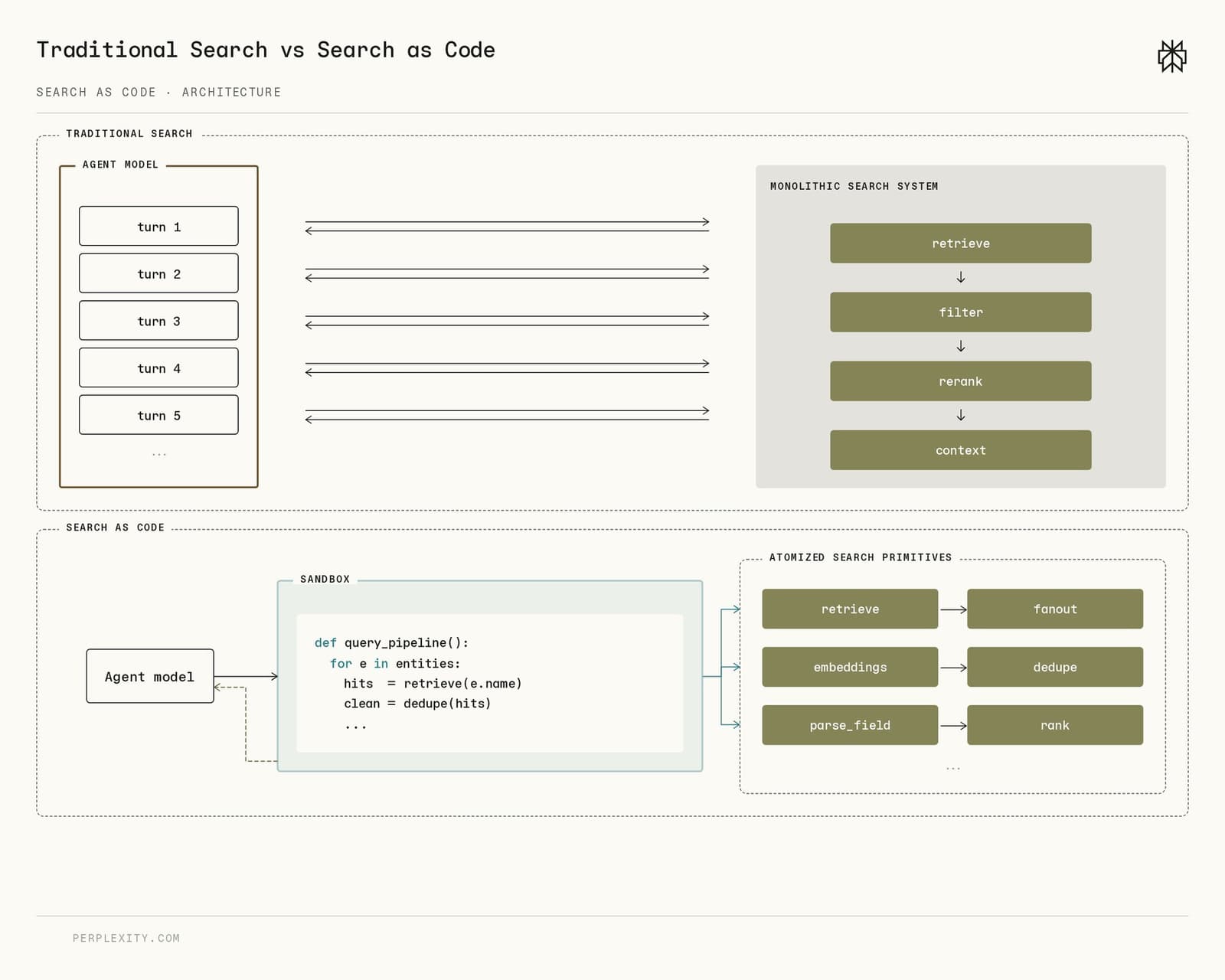
If the LiveBrowseComp findings hold up across more models, developers will need to redesign the browsing component. One likely path is to separate the language generation core from a dedicated retrieval engine that forces a fresh fetch for any time‑sensitive question.
We can also expect new benchmarks to appear, each tightening the freshness requirement and measuring how well agents handle contradictory or evolving information. Companies that can demonstrate reliable real‑time research will gain a competitive edge, especially in domains where up‑to‑the‑minute accuracy matters, such as finance, health, or breaking news.
Conclusion
The allure of AI search agents lies in their promise to blend conversational ease with live data. The LiveBrowseComp study shows that, at least for GPT‑5.4 and Kimi K2.6, the promise is still half‑realised. As the market matures, the pressure will mount to turn the echo into genuine discovery, or else users may revert to traditional search engines for time‑critical queries.
📎 Related Articles
Local AI Agents on Nvidia‑Powered PCs Could Trim Cloud Bills • Why a Growing Test Suite is Essential for Bedrock Agents • Critical Open‑Source Flaw Threatens Millions of AI Agents • Amazon Bedrock AgentCore streamlines AI sales agents • Enterprise AI Agents Face Readiness Gap, Endava Shows Path • Salesforce AI agents slash migration from 231 to 13 days • Why Permissions, Not Model Power, Are Holding AI Agents Back • Permissions, Not Model Speed, Hold Back AI Agents