Lead
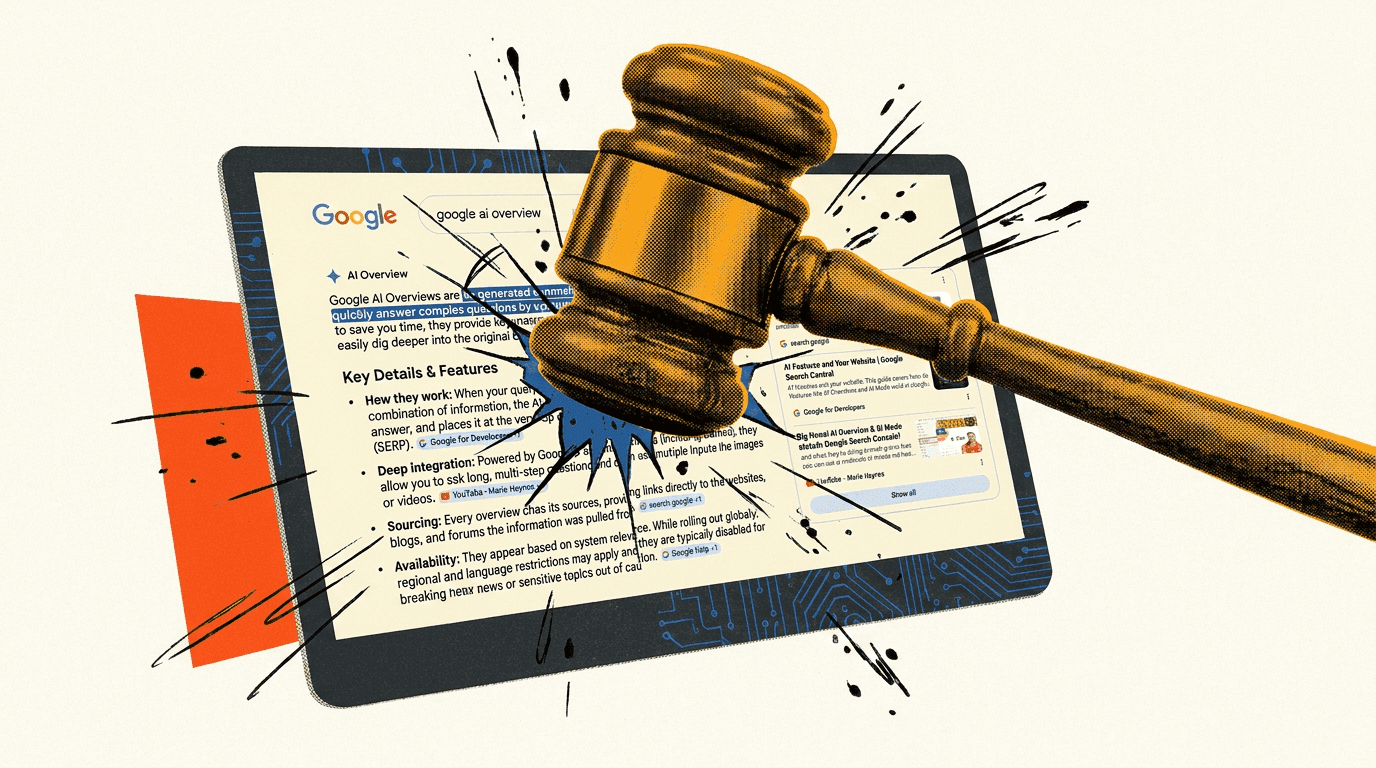
A German regional court on June 11, 2026 declared that Google is directly responsible for the content of its AI-generated search overviews, removing the protection that previously insulated search engines from liability for AI‑produced text.
Context
According to The Decoder, the case arose after Google’s AI mistakenly linked two publishers to fraud and fabricated claims that were not present in any of the sources it cited. The court examined whether the existing “limited liability” framework for search operators, which typically shields them from the content they index, applies to AI‑generated summaries that appear alongside search results. The judges concluded that the overviews are effectively Google’s own words, not a neutral aggregation of third‑party content.
Impact
The ruling could reshape how tech companies approach AI‑driven features across Europe and beyond. By treating AI overviews as the publisher’s own statements, the decision forces Google to vet the accuracy of every generated paragraph before it reaches users. This may lead to higher operational costs, slower rollout of new AI tools, and a surge in internal review processes.
Legal experts note that the judgment sets a precedent that could be cited in future cases involving other AI services, such as chatbots or generative image tools. If courts in other jurisdictions adopt similar reasoning, the broader tech industry might see a wave of lawsuits demanding compensation for misinformation spread by AI.
What’s Next
Google has not publicly commented on the verdict, but the company is expected to appeal the decision while simultaneously adjusting its AI pipelines to meet the new legal standard. The court gave Google a limited window to comply with the ruling, suggesting that immediate changes to the AI overview feature are likely.
Regulators in the European Union are watching the case closely. The European Commission’s upcoming AI Act may incorporate language that aligns with the German court’s view, potentially codifying liability for AI‑generated content across member states. Meanwhile, publishers who were incorrectly implicated may seek damages, prompting negotiations or further litigation.
For users, the practical effect could be a temporary slowdown in the availability of AI‑enhanced search snippets, as Google balances speed with accuracy. Consumers may notice more explicit source attributions or a return to traditional search listings while the company refines its AI models.
Bottom Line
The German ruling marks the first major judicial step toward holding a search giant accountable for AI‑generated misinformation. Its ripple effects will likely influence corporate policies, legislative drafts, and the everyday experience of searching the web.
📎 Related Articles
Google Unveils Gemini 3.5 at I/O 2026, Ushering an Agentic AI Era • AI Mode reshapes how Americans search • Google's AI Mode Shifts U.S. Search to Natural Language • Google releases 9 Gemini Omni and 3.5 demo videos, fixes quota bug • What Compute Power Means for Today’s AI Apps • NVIDIA, SK hynix Team Up on Memory Tech for AI Factories • US to Accelerate AI Development for National Security • NSA taps Anthropic's Mythos AI for offensive cyber strikes
Explore related AI topics
AI News Today • AI Agents • AI Models • AI Coding Tools • AI Video Tools • Gemini vs ChatGPT • Open Source AI Models