Verdict
If your development squad already uses Claude Code and needs a faster way to share runnable results, give Artifacts a try. Solo developers or teams that rely on existing version‑control workflows without real‑time preview may find the feature unnecessary.
What It Does
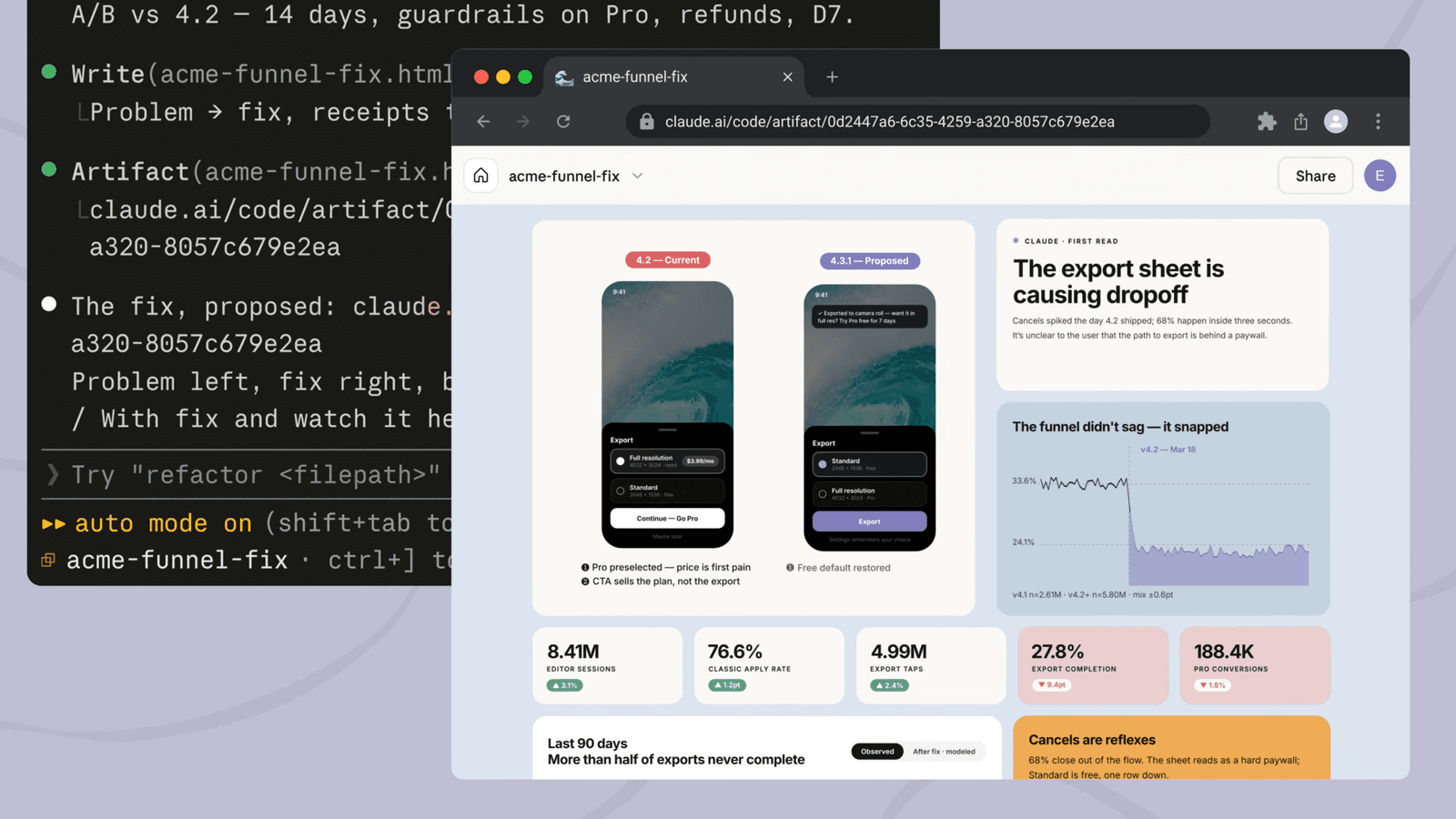
Anthropic announced that Claude Code can now convert the output of a coding session into an interactive web page, dubbed an artifact. Each artifact pulls directly from the full session context, meaning the code, its execution results, and any accompanying explanations are bundled together. When the underlying session changes—say you tweak a function or fix a bug—the artifact refreshes automatically, keeping the displayed page in sync without manual rebuilds. A built‑in version history records each change, so teammates can roll back or compare past states. The pages are shareable via a link, letting anyone with access view the live artifact in a browser without installing the Claude Code environment.
According to The Decoder, the feature is intended for “teams” and emphasizes that the live page reflects the most recent session state while preserving a chronological trail of edits.
Best Use Cases
1. Instant demos for stakeholders – Show a product manager a running UI component or data‑processing script without pulling the code into a separate sandbox.
2. Peer code reviews – Reviewers can see the exact output that produced a bug or performance metric, then suggest changes that instantly appear in the shared artifact.
3. Onboarding new hires – New team members can explore a live walkthrough of a codebase, watching how functions evolve in real time.
4. Documentation that runs – Technical writers can embed an artifact in internal docs, giving readers an interactive example that stays current as the code evolves.
5. Rapid feedback loops – When a bug is reproduced, the engineer can create an artifact, share it with the QA lead, and watch the fix propagate instantly.
Limits
The feature is locked to Claude Code sessions; there’s no mention of exporting artifacts to external hosting platforms or integrating them with CI pipelines. Pricing details were not disclosed, so organizations must assume the cost aligns with existing Claude Code plans. Because artifacts depend on the live session context, they may not function if the underlying model or environment is altered outside of Claude Code. Finally, the public beta status (implied by the recent launch) suggests that stability and feature completeness could evolve over the next few weeks.
Alternatives
Traditional approaches—GitHub pull requests, static code snippets in Slack, or screen‑recorded demos—still work, but they lack the automatic refresh and built‑in version timeline that Artifacts provide. IDE‑centric sharing tools like VS Code Live Share let teammates view a live editing session, yet they require all participants to have the editor installed and do not generate a persistent, shareable web page. For teams that need a lightweight, browser‑only view of code results, Artifacts fill a niche that these alternatives miss.
Final Recommendation
Anthropic’s Artifacts extend Claude Code from a private coding assistant into a collaborative showcase platform. Teams already embedded in the Claude ecosystem will likely see immediate productivity gains, especially when frequent demos or iterative reviews are part of their workflow. Smaller groups or solo developers who are comfortable with existing version‑control and code‑sharing habits may not need the extra layer. In short, adopt Artifacts if you value instant, version‑tracked, browser‑based previews; otherwise, stick with your current tooling until the feature matures and pricing becomes clear.
📎 Related Articles
Anthropic Blocks AI Tools in Interviews to Test Real Thinking • Anthropic rolls out Claude Opus 4.8 and readies Mythos models for all users • Claude Fable 5’s price jump raises policy questions • Anthropic Opens Mythos-Class Claude Fable 5 to Public Today • NSA taps Anthropic's Mythos AI for offensive cyber strikes • Anthropic launches Claude Opus 4.8, its most powerful model yet • Salt Code Review: Enforcing Security in AI Coding Assistants • Anthropic disables new model after White House security directive
Explore related AI topics
AI News Today • AI Tools • Best AI Tools • ChatGPT Prompts • AI Agents