Thesis: Vera’s performance could force a rethink of AI‑infrastructure budgets
The latest benchmark leak shows NVIDIA’s Vera CPU delivering the kind of sustained, all‑core throughput that modern agentic AI workloads demand. If the early numbers hold, enterprises may have to revisit the economics of their AI factories, shifting spend from GPUs and memory to a more balanced CPU‑GPU stack.
Evidence: Benchmarks confirm a new performance sweet spot
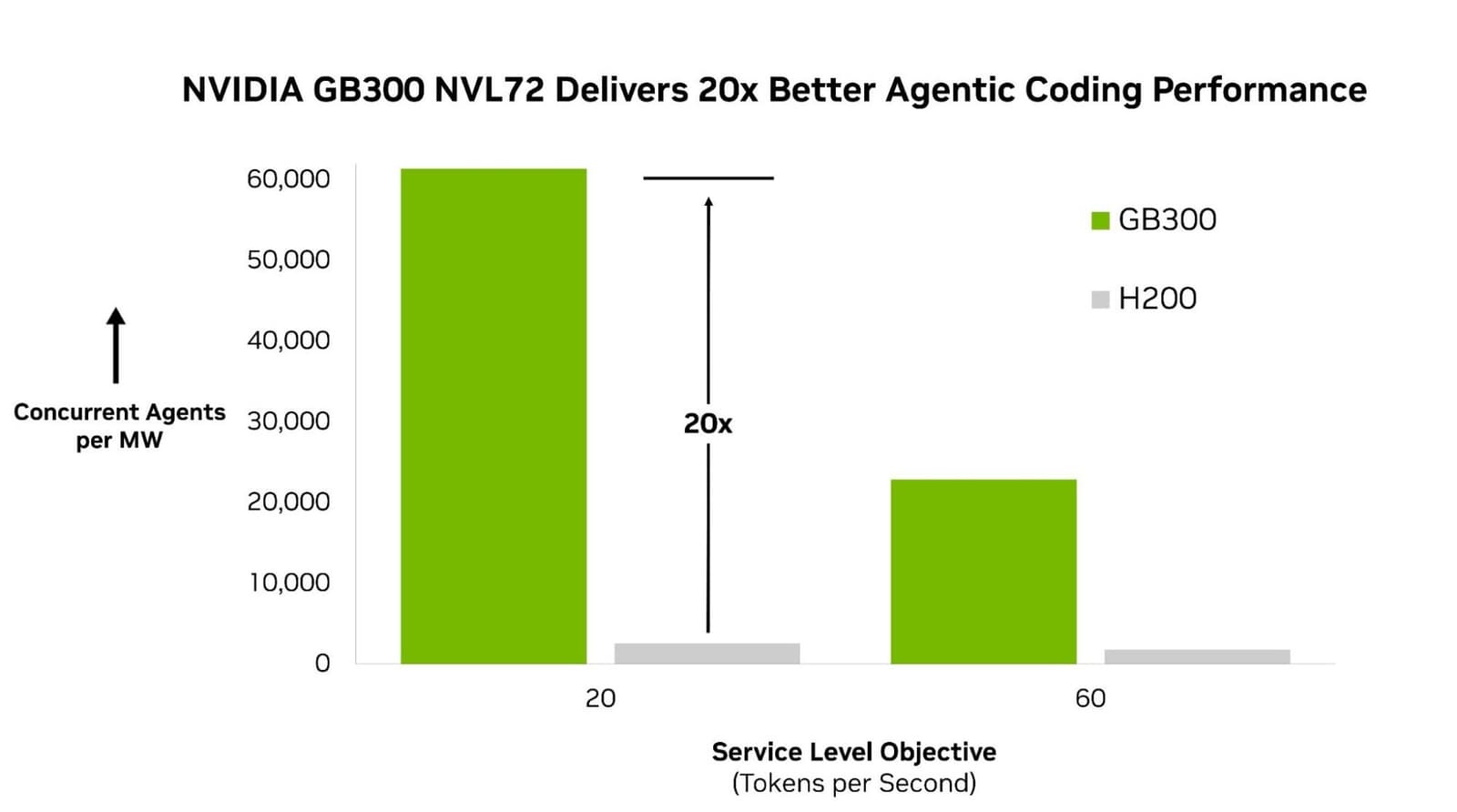
According to NVIDIA’s own newsroom post on May 26, 2026, the shift toward agentic AI creates a “new CPU requirement for the AI factory: fast cores, massive memory bandwidth and the ability to sustain high performance when all cores are active.” The post cites initial benchmark results from Phoronix, noting that the Vera CPU “meets this need.” While the full benchmark suite is not disclosed, the description alone signals that Vera can keep every core busy without throttling, a trait that has traditionally been the Achilles’ heel of many high‑core‑count processors.
Context: AI factories are expanding beyond the GPU‑only model
At GTC Taipei, held during COMPUTEX and reported on May 21, 2026, NVIDIA highlighted the rise of “agentic and physical AI” across industries. The event’s agenda covered everything from scaling infrastructure to deploying embodied autonomy. That broader agenda underscores a market reality: AI workloads now blend large language models, real‑time perception, and control loops that all stress the CPU as much as the GPU.
Robotics research presented at ICRA on May 28, 2026, further illustrates this trend. NVIDIA Research showcased eight papers on simulation‑to‑real transfer, emphasizing that robots must perceive, reason, and plan on‑device. Those capabilities rely on a CPU that can feed data to accelerators without bottlenecks, reinforcing the need for a processor like Vera.
Cost implications: Where the dollars may shift
Data‑center operators traditionally budget the bulk of AI spend on GPUs and high‑bandwidth memory. If a CPU can sustain full‑core performance, the number of GPUs required per workload could drop, reducing power, cooling, and licensing costs. Moreover, Vera’s “massive memory bandwidth” suggests it can handle the data‑intensive pipelines that currently force organizations to over‑provision DRAM on GPU nodes.
Financial community events listed by NVIDIA on May 21, 2026, indicate that the company is courting investors with a narrative that ties hardware innovation to cost efficiency. By positioning Vera as the missing piece for an “AI factory” that balances compute across silicon, NVIDIA is signaling that future revenue may come not just from GPU sales but from a more integrated platform that promises lower total‑of‑ownership (TCO) for enterprises.
Counter‑Arguments: Competition still holds cards
While Vera’s early benchmarks look promising, the competitive field is not static. Other silicon vendors have been pushing high‑core CPUs with advanced interconnects and custom accelerators. The lack of publicly disclosed head‑to‑head numbers means Vera’s advantage remains unproven at scale. Additionally, the performance‑per‑watt equation will be critical; a CPU that delivers raw throughput but draws excessive power could negate any savings on GPU count.
Another concern is software readiness. Agentic AI workloads often rely on specialized runtimes and libraries that have been tuned for existing x86 and ARM ecosystems. If developers must re‑engineer pipelines to exploit Vera’s architecture, the migration cost could offset hardware savings, at least in the short term.
Prediction: A more balanced AI stack will emerge by 2028
Assuming the Phoronix benchmarks translate into production environments, Vera will force cloud providers and large enterprises to reconsider the CPU‑GPU ratio in their AI clusters. By 2028, we can expect a wave of “Vera‑enabled” server designs that pair fewer, higher‑performance GPUs with a single, high‑bandwidth CPU. Those designs will likely be marketed as low‑TCO AI factories, a term already circulating in NVIDIA’s GTC messaging.
In parallel, software stacks will evolve. Compiler vendors and framework teams are likely to add explicit support for Vera’s core and memory characteristics, smoothing the path for developers. As the ecosystem matures, the cost differential between a Vera‑centric node and a traditional GPU‑heavy node could become a decisive factor in procurement decisions, especially for workloads that require sustained, all‑core processing such as autonomous robotics, real‑time recommendation engines, and large‑scale simulation‑to‑real pipelines.
Conclusion: Vera could be the catalyst for a cost‑driven redesign of AI infrastructure
The early data suggests that NVIDIA’s Vera CPU is more than a performance showcase; it is a strategic lever aimed at reshaping how AI factories allocate spend. If the chip lives up to its promise, the industry will see a shift toward more balanced compute platforms, lower TCO, and a new competitive battleground that extends beyond GPUs alone.
📎 Related Articles
Brazilian News Meets ChatGPT: What the New Partnership Means • OpenAI's Brazil news pact raises questions about AI‑driven journalism • OpenAI taps Brazil's top newsrooms for trusted ChatGPT content • AdventHealth Leverages OpenAI to Put Patients Back at the Center • Google's Missouri Investment Marks a New Direction for AI Talent • AdventHealth taps OpenAI to free clinicians for patient care • OpenAI’s Codex Takes the Lead in Enterprise Coding Agents • Google I/O 2026 Dialogues: The Push Toward a Unified AI Ecosystem